


On Saturday I sat down at the kitchen table to pay the taxe foncière on the château for the first time.
The taxe foncière is the French property tax. It arrives every autumn, right around the time the leaves start falling, as if France has decided the mood is already a little melancholy, so why not. Ours came to nearly €5,000. I paid it, closed the laptop, and sat there for a minute with a feeling I’ve been circling for a few weeks now.
We have spent a lot of money this year, and I can’t really see any of it.
I’m aware that “my château pool is behind schedule” is not a sentence that earns a lot of sympathy, and I’m not asking for any. But if you’ve ever spent your savings on a new roof, or a water heater, or the sewer line under the front yard, instead of on the vacation you’d been planning, or on a beautiful bedroom makeover, you already know exactly the feeling I mean. This one just happens to have turrets.
So here’s where the money went.
Two septic systems. One for the château and one for the coach house, both installed this spring, both completely invisible, both among the most expensive things on the property so far. When I wrote about the septic going in, I said that old buildings get restored from the inside out, with the invisible things going first. I meant it, and I still mean it, but I didn’t fully appreciate how it would feel to spend that kind of money on something whose entire job is to stay underground, never be thought about, and never be seen by anyone ever again. And all of this invisible work came with a bonus: the septic also took two of our prettiest stretches of lawn down with it, just in time for a summer of five heatwaves. We’ve been coaxing them back ever since (with mixed results).
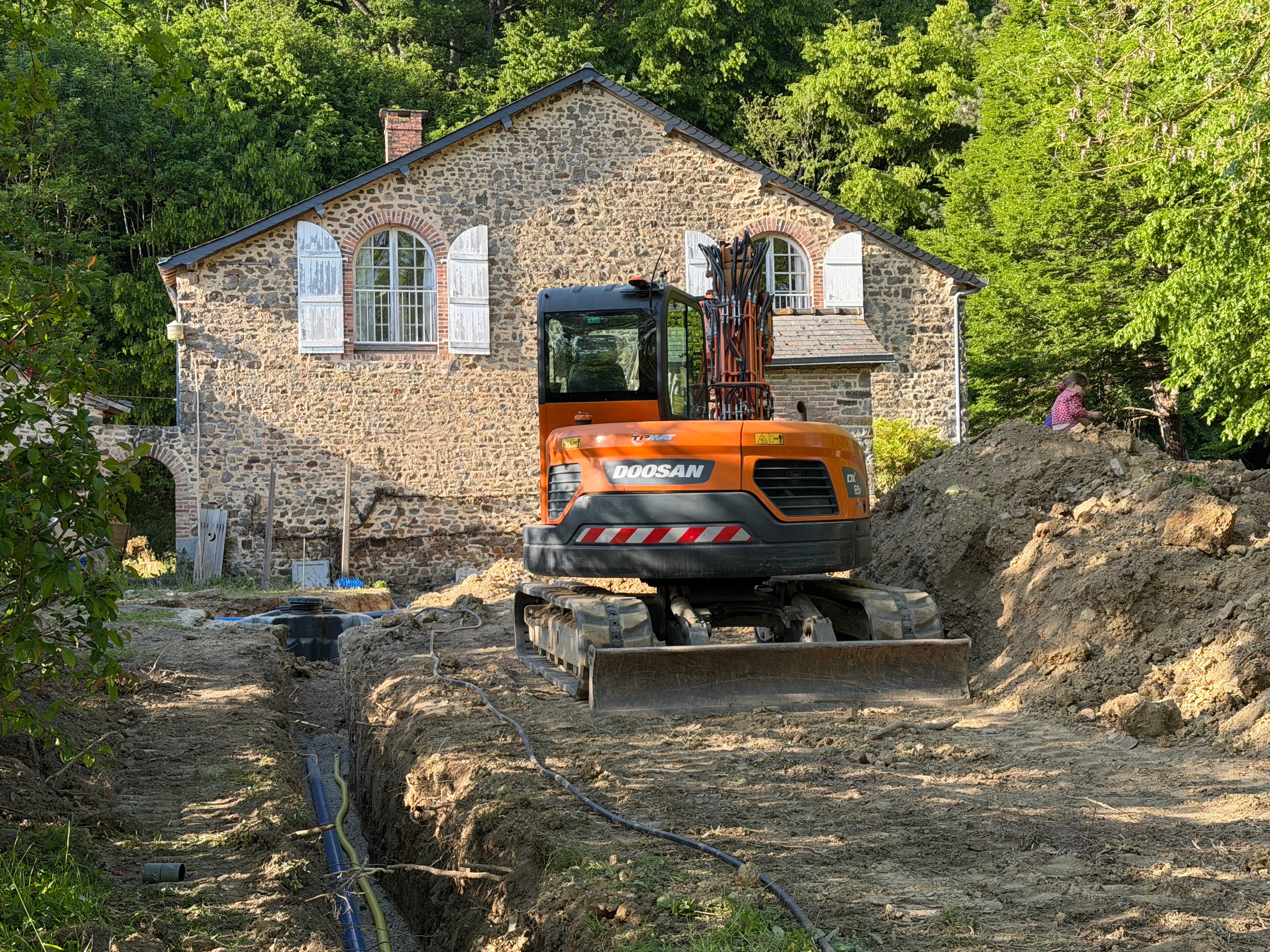
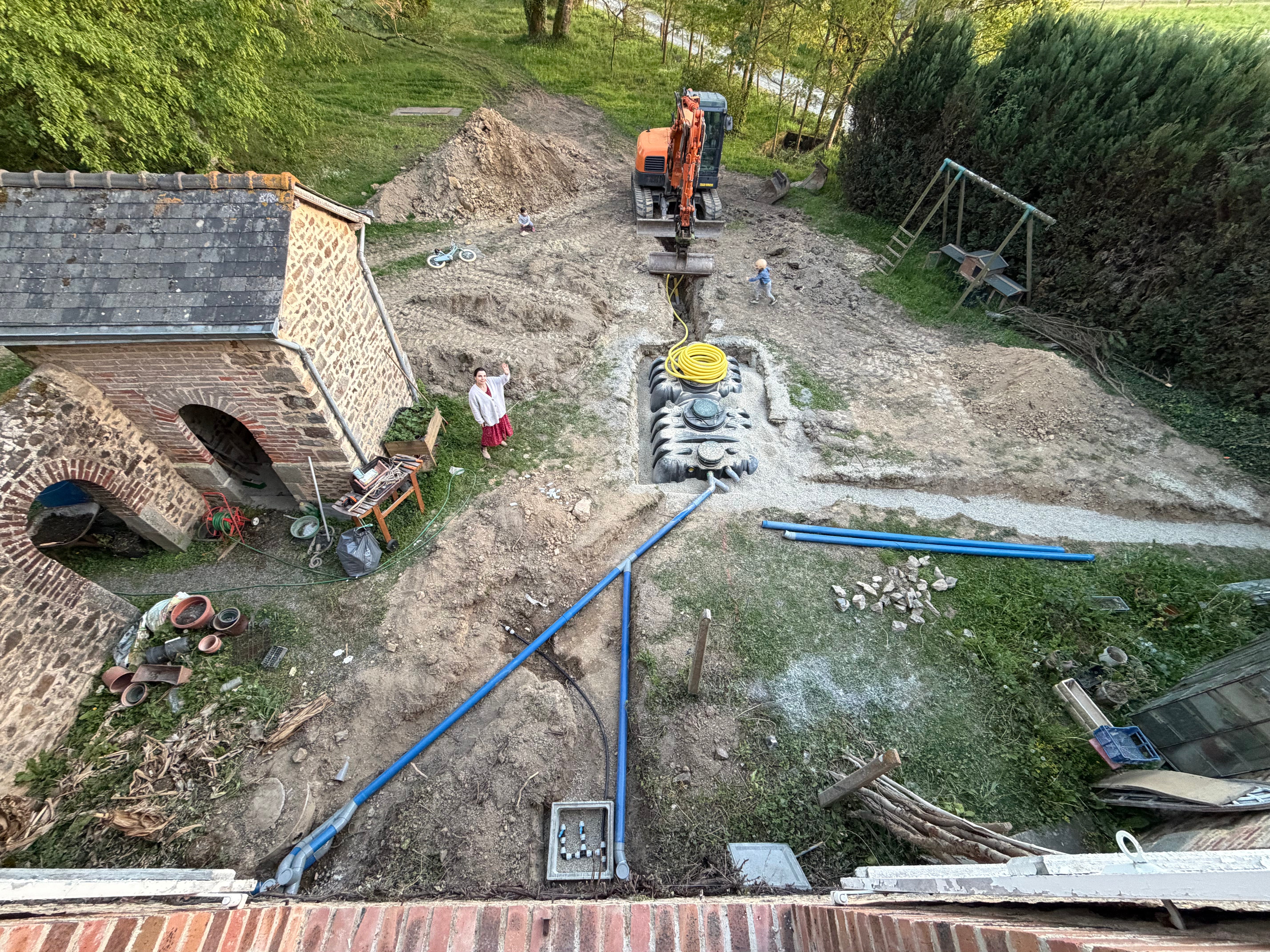
We’ve been editing our YouTube videos about the septic installation this month, which means I’ve spent several evenings rewatching a digger dig a hole. The installation was finished months ago, but watching it again was like flipping through the photo album of a very expensive year and finding that every single picture is of, well, dirt.
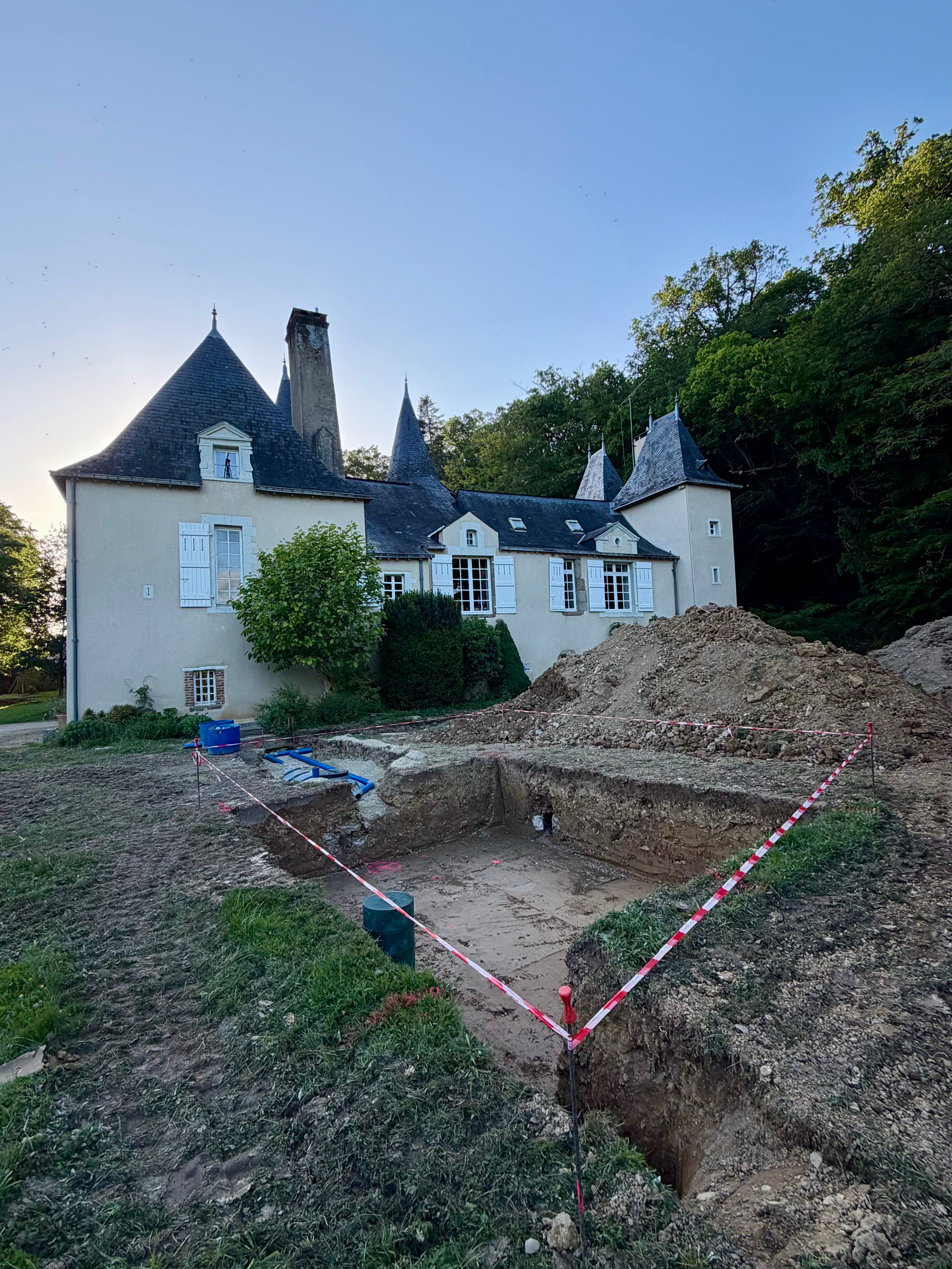
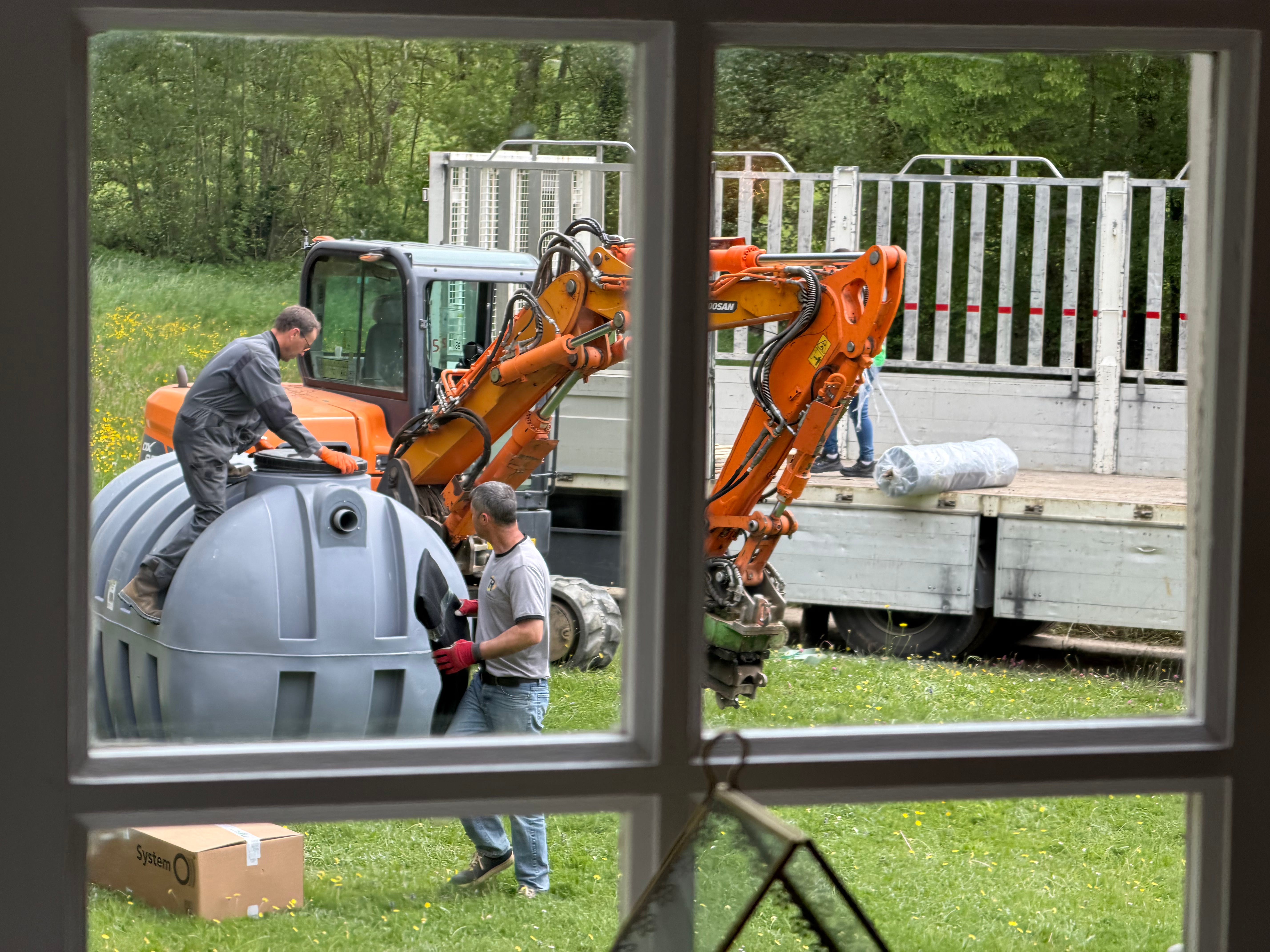
There is no big reveal for a septic tank. Nobody plays the Fixer Upper music. Nobody walks into the back field and gasps in awe.
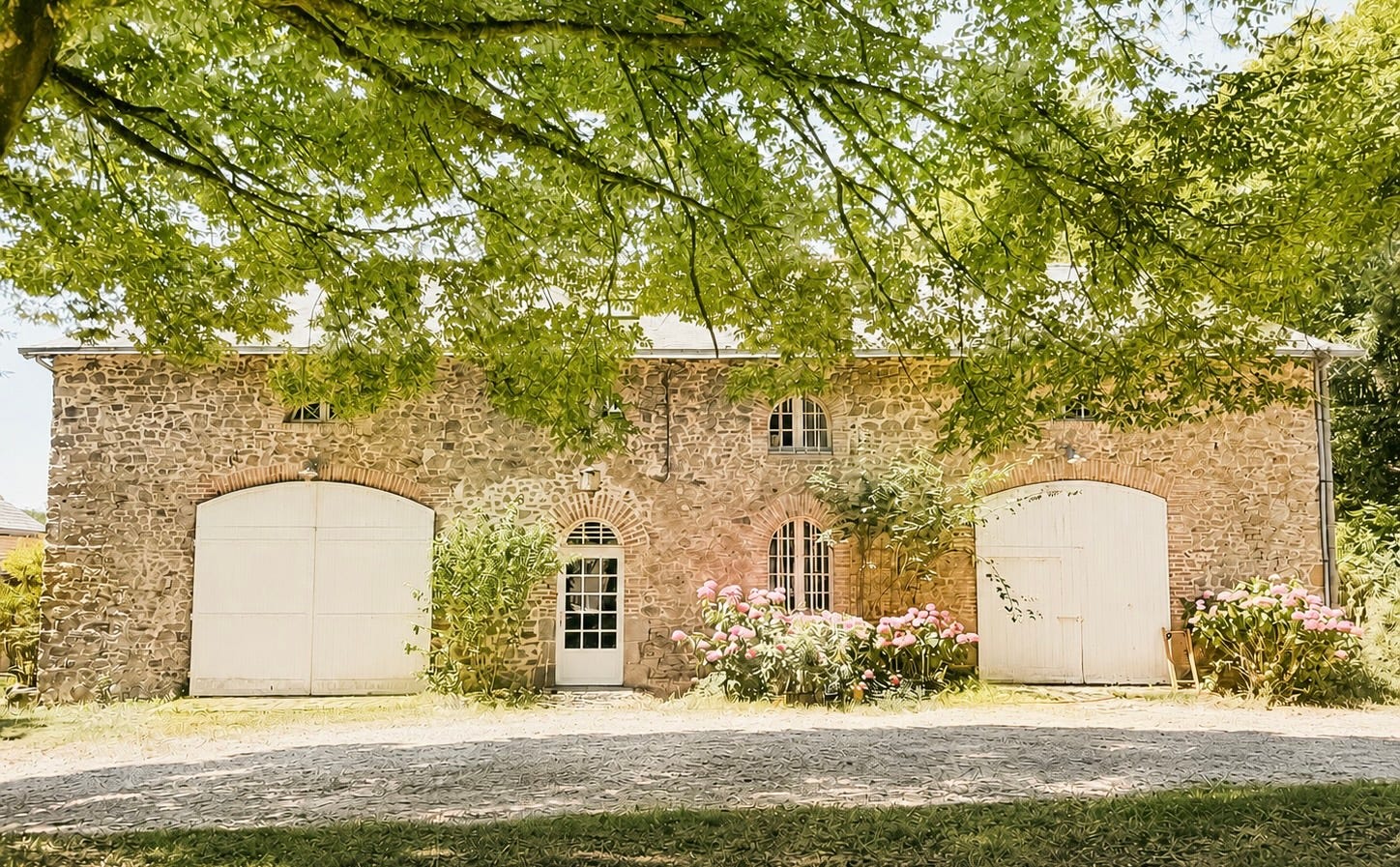
The coach house. It looks lovely, truly, and I’m very proud of the work we put into it. It’s cleaned and decorated and furnished down to the sheets and the teaspoons, and it has started earning a little money from guests, which helps. We just don’t live in it, so it’s a stretch to say we can fully enjoy the fruits of our labor. I go over sometimes to check on something and stand in a room I love, and then walk back to the château, where the radiators are still glaring at me, and the horror film lighting in our tiny galley kitchen is now flickering, just in time for Halloween.
The pool. It is October, and the pool is…a hole. A large chasm, if you will, surrounded by dirt.
It’s a very well-engineered hole. It has a concrete shell, and orange markers, and an air of great potential. It does not have a liner, or water, or a cover, or the travertine terrace I have been picturing in my head since (roughly) March.
Below: why the pool is still a hole (it involves a drought and a very long line of dominoes), the beautiful kitchen we said no to, and what all this invisible work actually costs in rural France.
Castle Diaries is my renovation journal for paid Supporting Members. Twice a month, I take you inside the château: the plans, the money and the decisions, as we make them.
