



Before I show you around, I want to say something plainly: I know how this sounds.
“We bought a château” is not a sentence I ever expected to say out loud, and I’m very aware that it can land as either magical or…mildly unhinged, depending on the day.
We’re proud, yes. We’re also grateful. And a little stunned. And still learning what it actually means to care for a property like this without romanticizing it into something it is not.
Because while it is beautiful, it is also old. It comes with real responsibilities, real costs, and real moments of standing in a hallway wondering why the light switch does absolutely nothing (true story).
But still, here we are.
For anyone new: we’re an American family who moved from California to France a little over two years ago with two young children. We rented a farmhouse, explored regions slowly, and tried to make thoughtful decisions instead of impulsive ones. This château is the result of a long, not-straight-line journey (I’ll tell that story soon). And today, I want to give you the very first tour, the before tour, the honest version, with both charm and beaucoup de peeling paint.
So. Come in.
Stop 1: The Exterior
This is a seven-bedroom château on 11 acres in western France. The land includes a private forest, and the property borders a river.
The first thing I want you to know is that we did not buy this because we wanted to feel like royalty. We bought it because we wanted a family home with space to breathe, and because we could see a future here: one that includes restoration, creating beautiful guest spaces, and building something long-term. Not fast. Not flashy. Just authentic and us.
But even more than that, we wanted a place where our children can really grow up outside. Space to roam and play, gardens we can shape over time, and the kind of daily life where you can step out the door and be in nature immediately. We want to grow food here, plant things we can tend for years, and slowly customize this property into the dream version of home for our family.
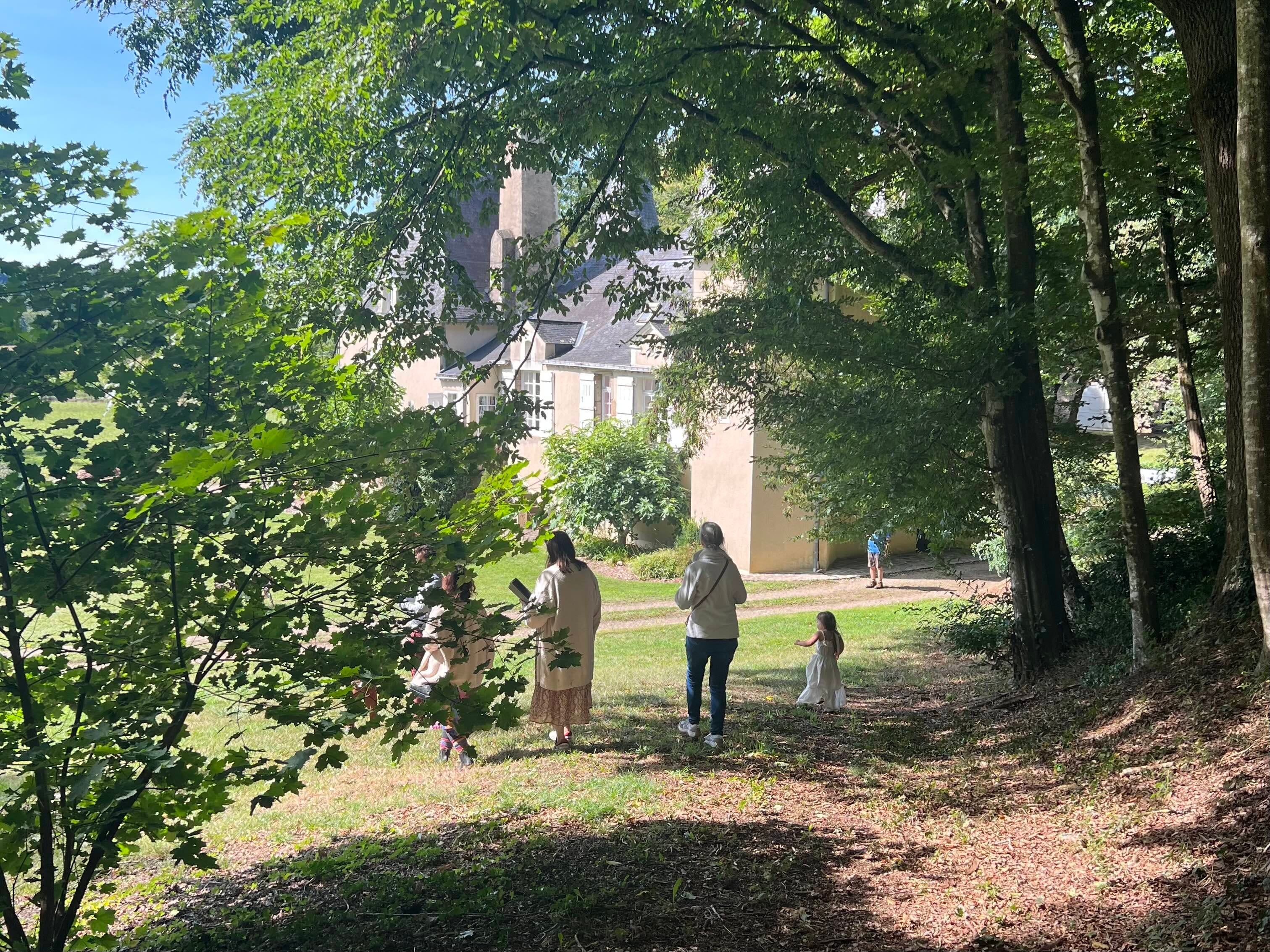
The château is not “done.” It is not styled. It is not a photoshoot backdrop (yet). It is a living place that needs care. But the bones are solid, and that mattered to us.
Stop 2: The Red Front Door
The front door, quintescentially placed on the side of one of the turrets, is red - the kind of red that looks like it’s been there forever (and maybe it has). Above it is beautiful stonework that made me pause the first time we visited, because it felt like the house was subtly reminding us: this isn’t new. Be gentle with it.
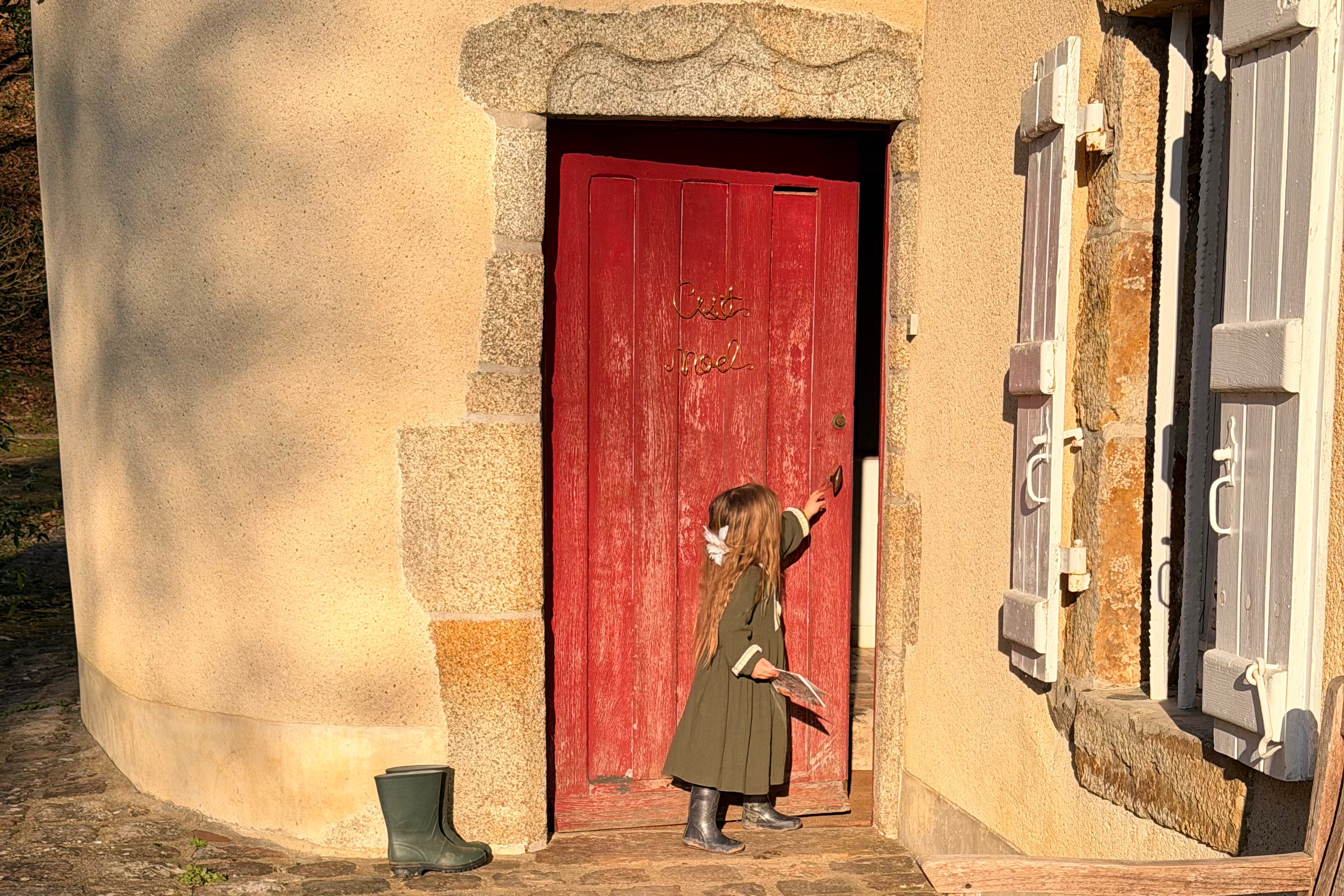
A good door does something important. It acts as a sort of magic portal that says: you’re entering a different world.
Not a perfect world. A whimsical one.
Stop 3: The Main Living Area
One of our favorite features is the main living area. It has an open-ish floor plan, which is surprisingly unusual in châteaux.
And it’s not just the layout. The ceiling has these centuries-old wood beams running across the entire space, which gives it the most wonderful Cotswolds cottage feel. It makes the room feel warm and lived-in, not too grand, not overwhelming, and definitely not cold. More “cozy family hearth” than “echoing palace.”
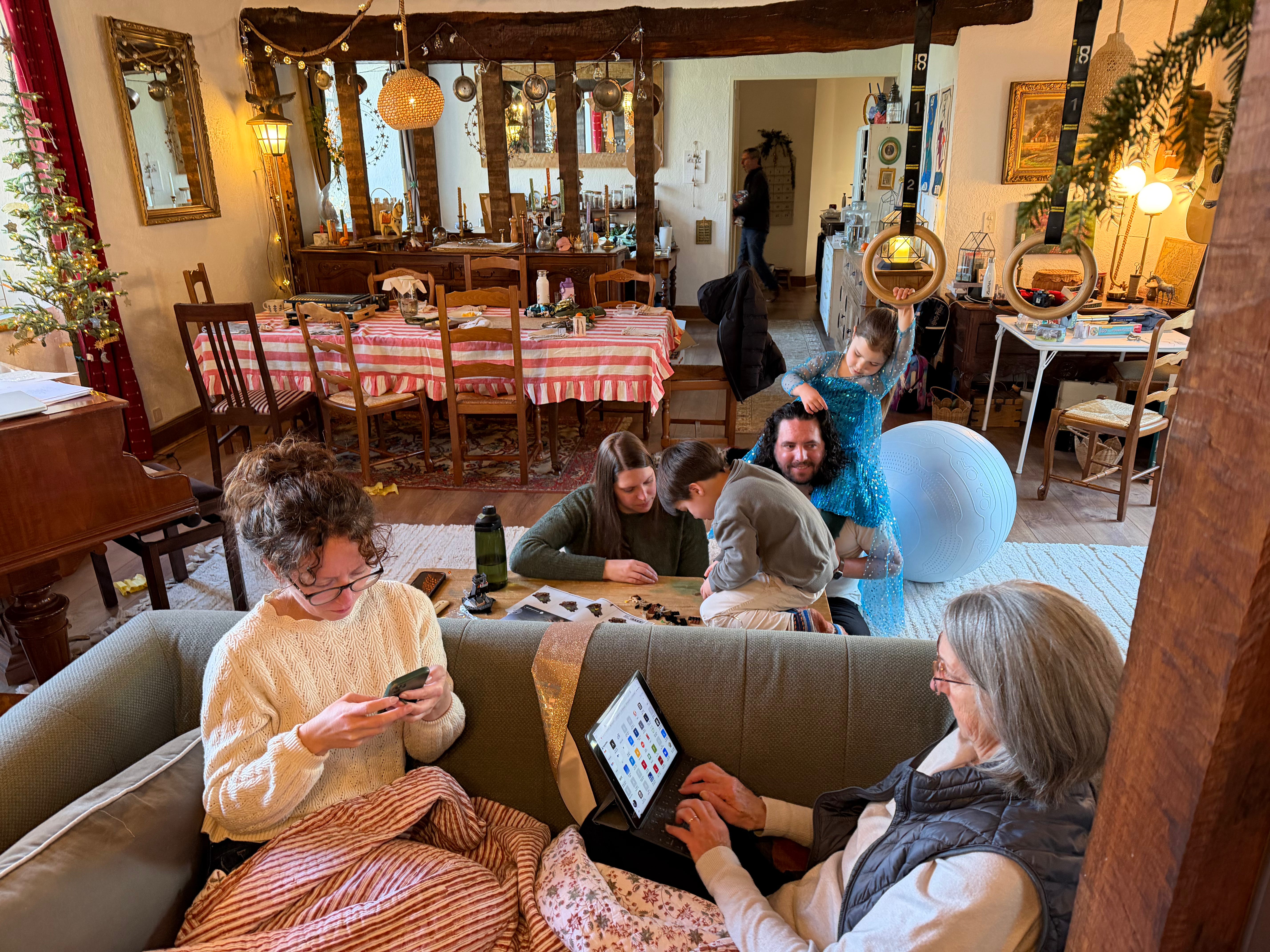
Old houses like this can be beautiful but very segmented: room after room after room. This space is different. It has light. It feels connected. It makes daily life feel doable.
And with kids, that matters. I don’t want to raise our children scattered across distant wings like a tiny royal family sending messages by courier. I want us together, hearing each other, eating together, being able to call out “who left the lights on?” without needing a map or an intercom.
This space is one of the places that made us think: we can actually live here while we renovate slowly.
Stop 4: Our Bedroom
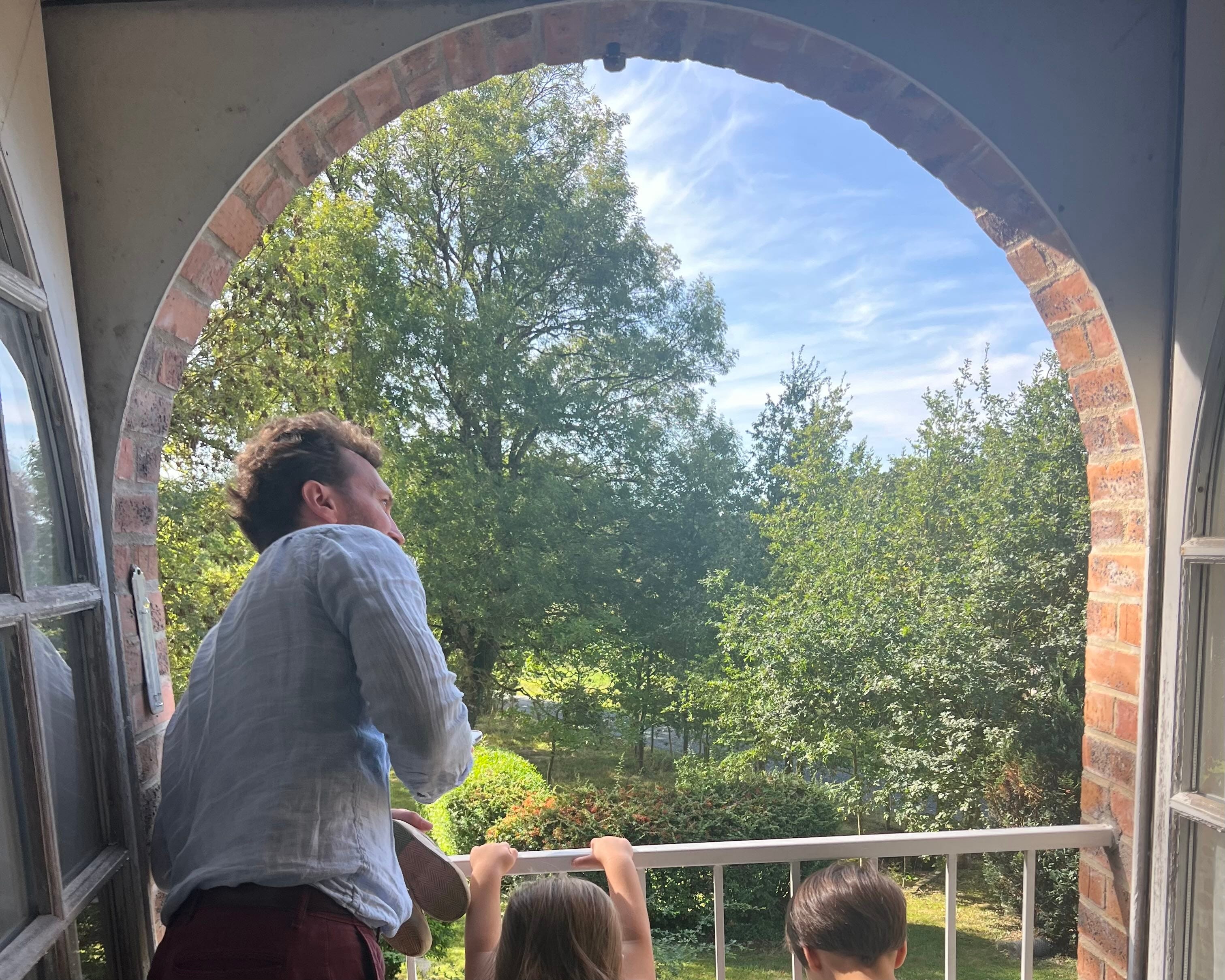
Our bedroom has high ceilings and big windows, lovely, yes… and also a reminder that this house was not designed for modern expectations.
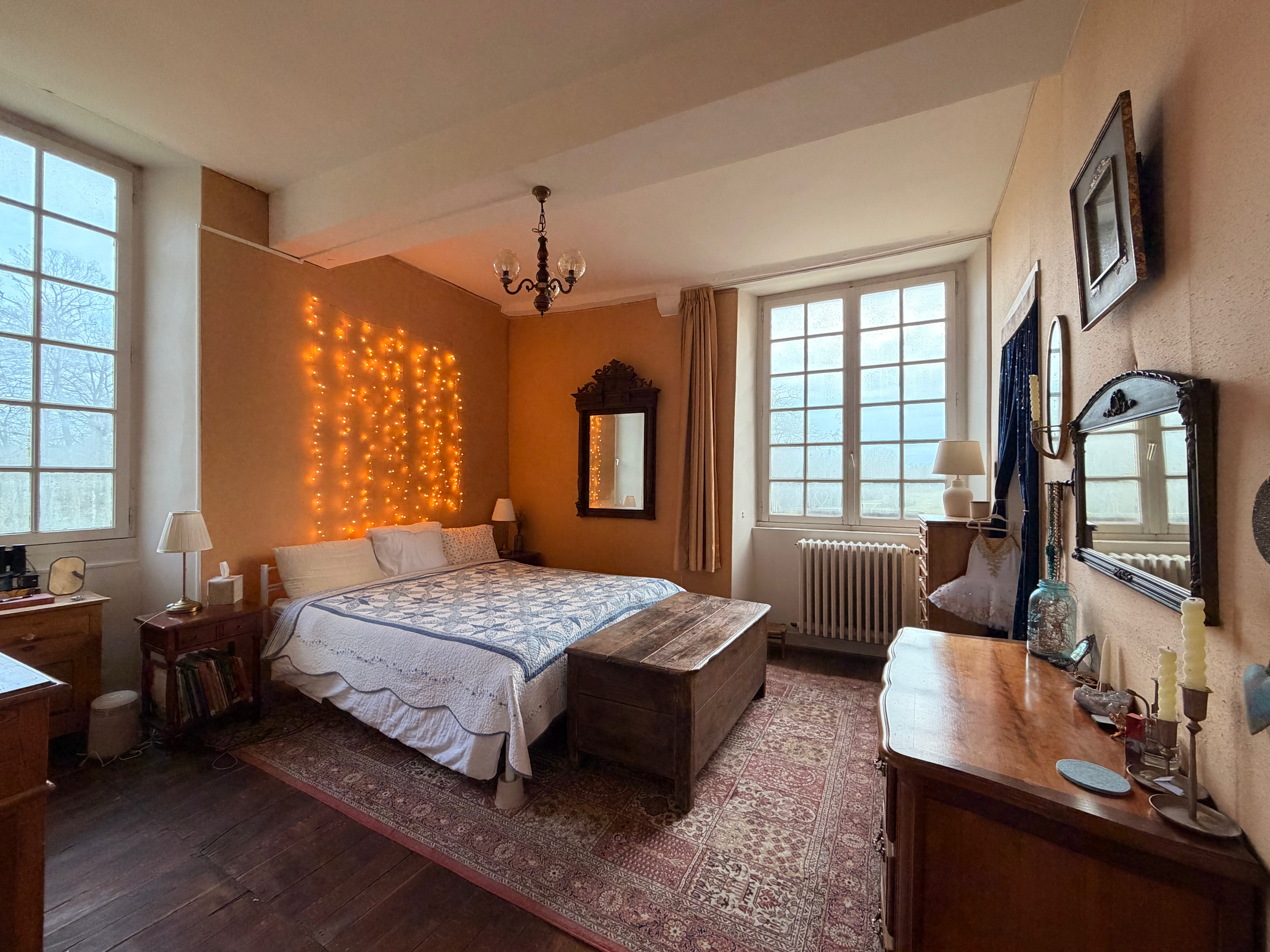
Because the windows are single-pane. All of them. Everywhere. Which means winter is a season you feel in your bones unless you’re proactive. In other words, it’s friggin freezing!
So right now it’s a combination of: beautiful light + thick socks + mild disbelief.
But it’s also peaceful. There’s something calming about waking up in a room with tall ceilings and green countryside outside the windows, even when you’re thinking about insulation and how desperately you want to change the hideous orange fabric wallpaper covering the walls.
Stop 5: A Guest Room (Potential in Peeling Paint Form)
Here’s a guest room as it exists today: peeling paint, aged everything, and a general sense of “I was last updated during a time when people smoked indoors.” It needs some major updating.
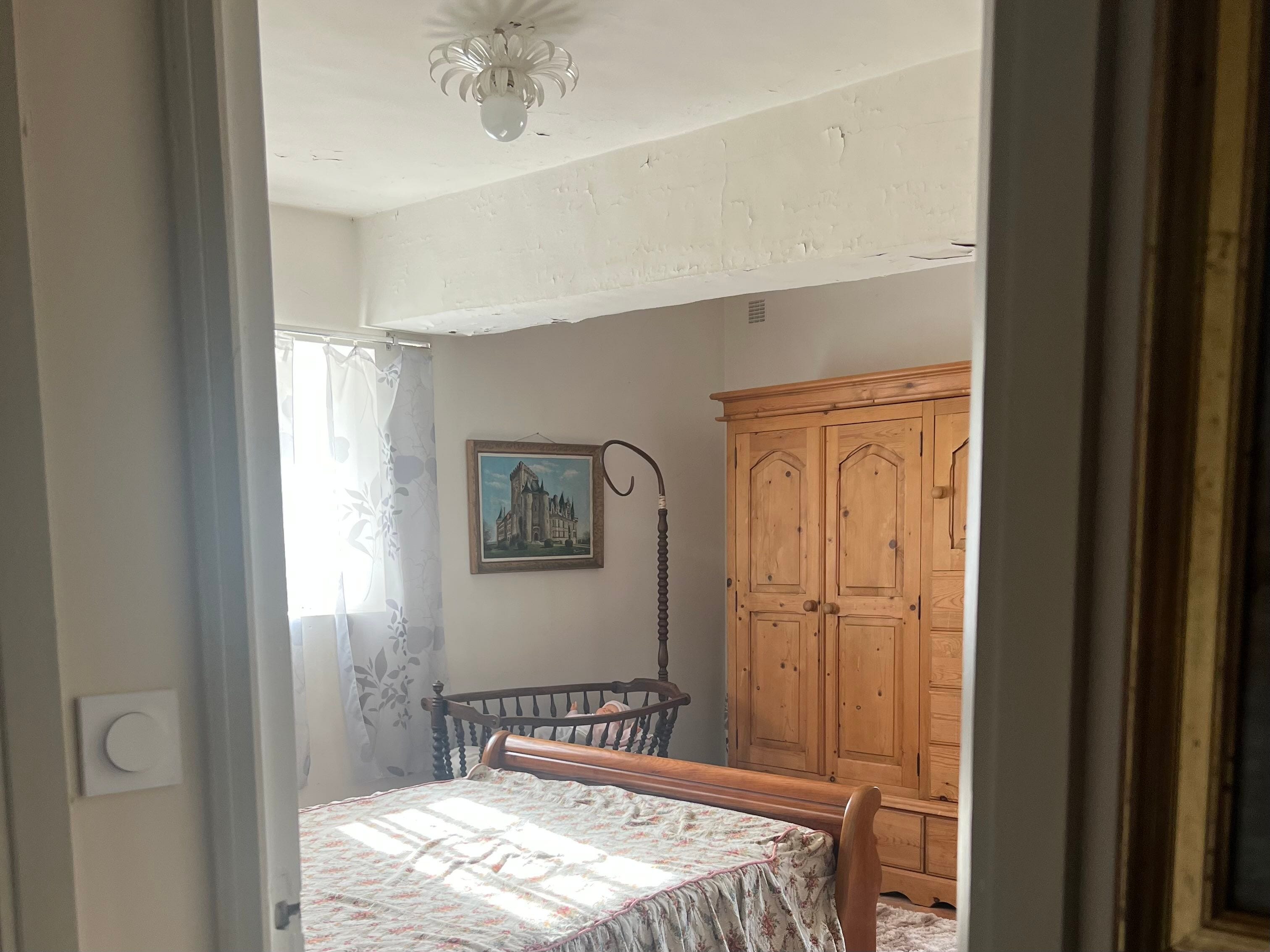
And yet, the proportions are good. The windows (not seen in the above image) are generous. The space has that old-house feeling of possibility.
I’m including this photo because I want to keep this tour honest. This is not an already-polished renovation reveal. It’s the start.
Stop 6: The River
The river is one of the quieter miracles here. It borders the property, and it brings a kind of calm that’s hard to explain until you’ve stood near it on a cold morning and listened.
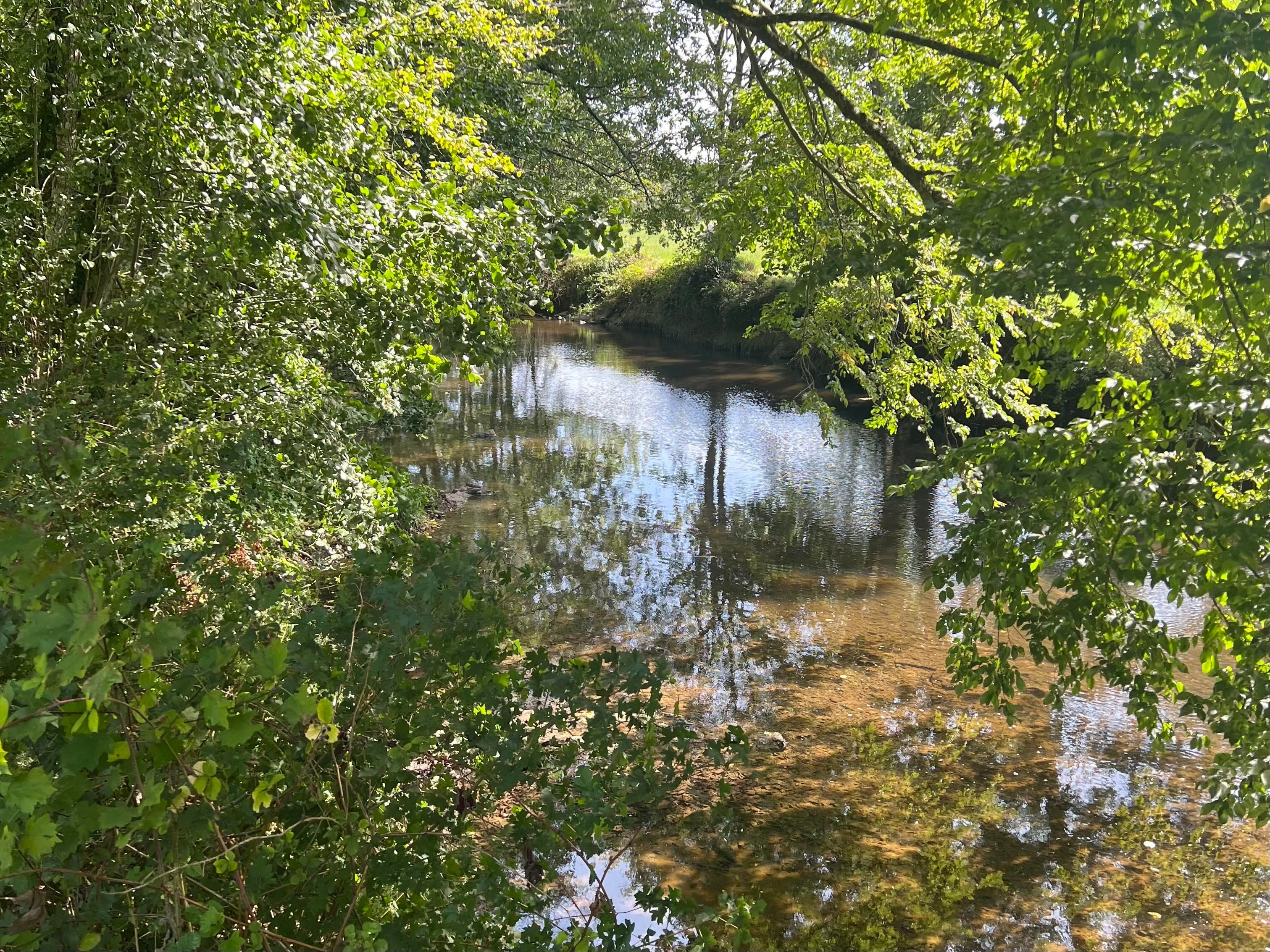
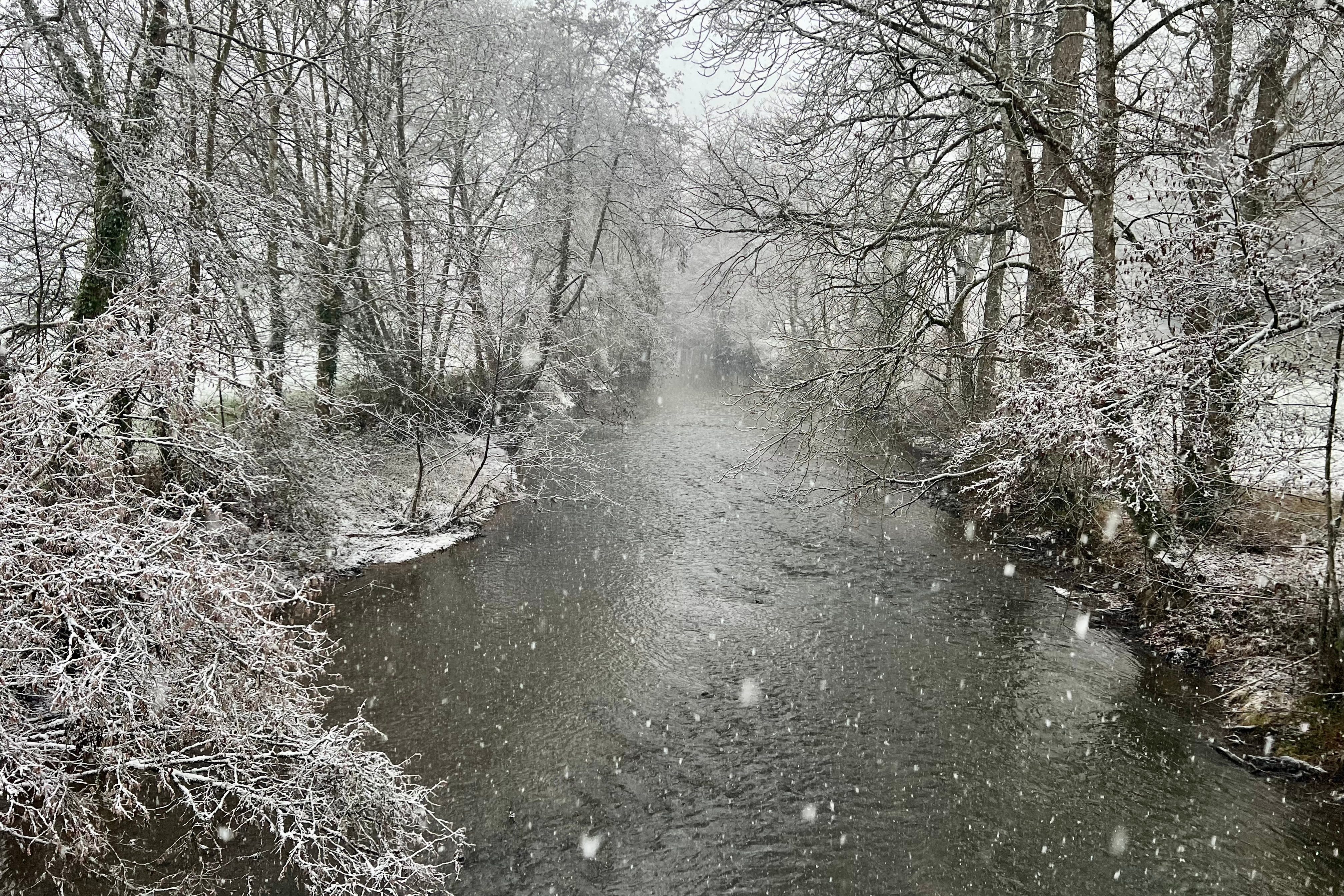
It also reminds us that nature is in charge. This isn’t manicured estate living. The land is largely a blank slate. There’s almost no formal landscaping right now, which is intimidating, because it means we have to envision the garden from scratch, but also freeing, because we’re not inheriting someone else’s finished vision.
Stop 7: The Coach House
The coach house is a four-bedroom outbuilding that originally served the horse-drawn coaches. It’s one of the future guest spaces we’re most excited about, not because it’s glamorous now, but because it’s a solid building with a clear purpose.
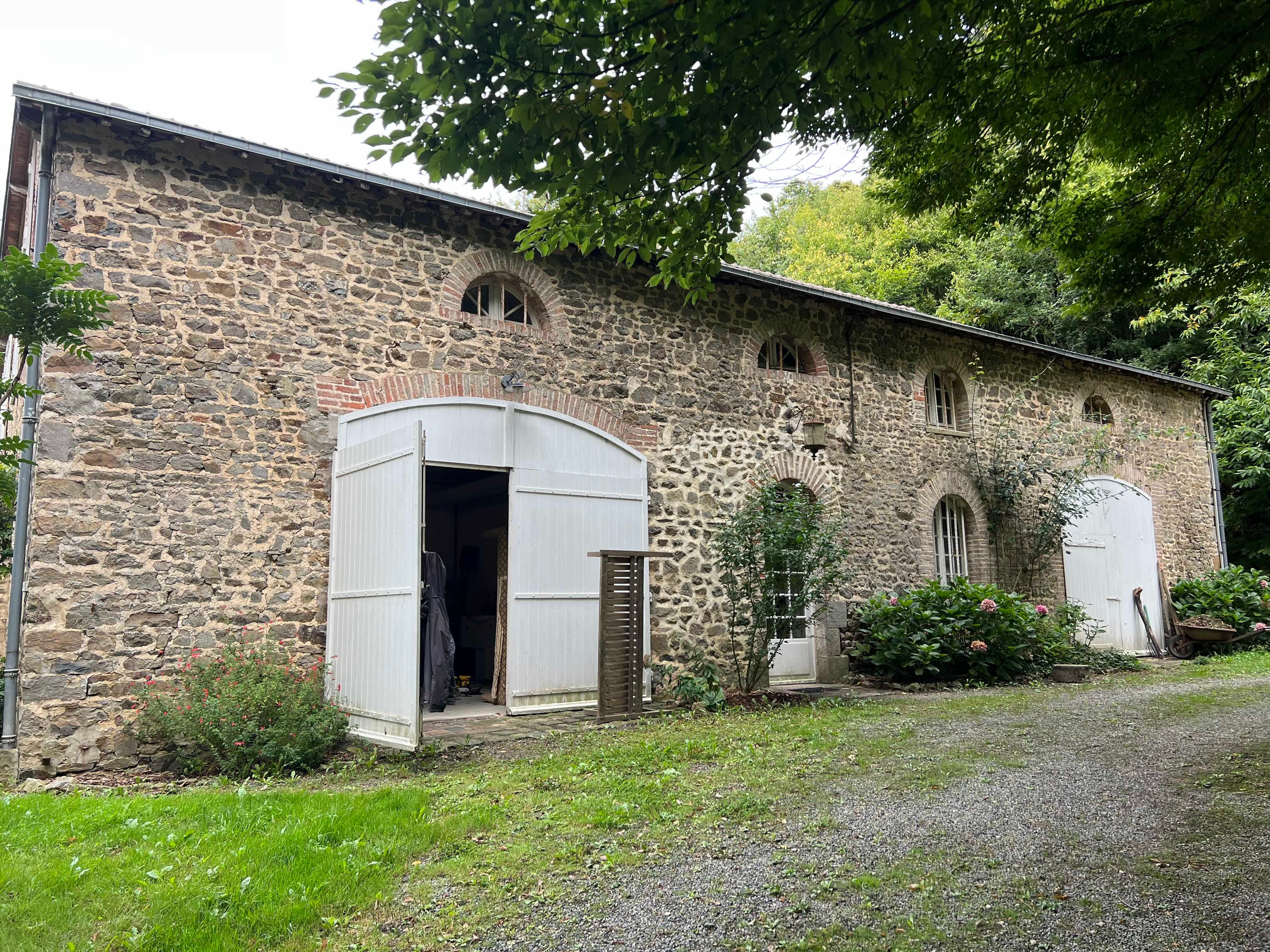
It has that “this could be something” energy, which is basically the theme of this entire property.
Stop 8: The Gatehouse
The gatehouse, originally for the gatekeeper, needs a complete renovation inside. It’s currently less “storybook cottage” and more “project that will teach us patience.”
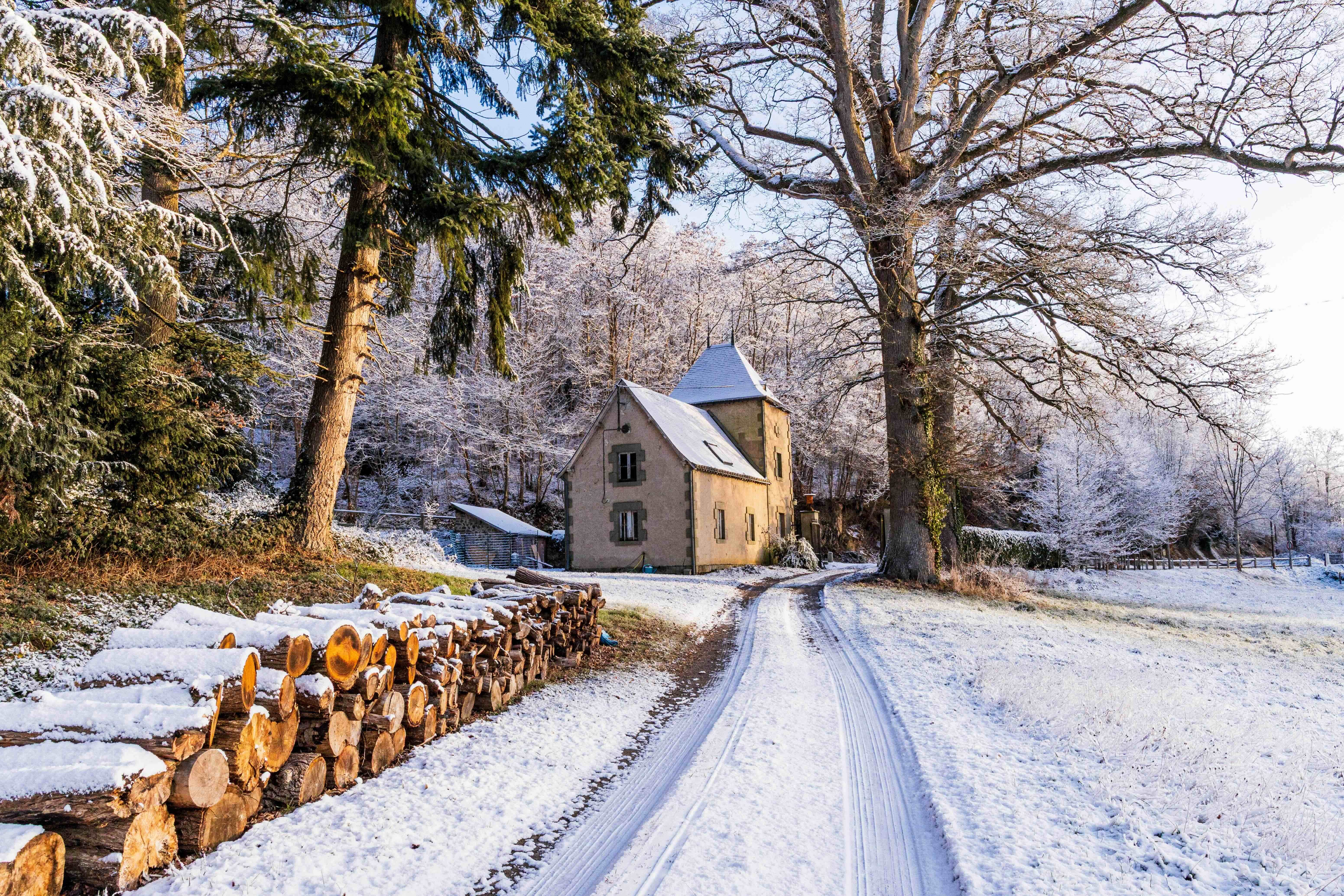
But it matters to the story of the place. And there’s something satisfying about restoring the smaller buildings too, not just the main château.
Stop 9: The Chapel
The chapel is the oldest building on the property, and it is in desperate need of restoration. It also has a lot of history, which I’ll go into in a future post. From what we’ve learned so far, it used to be a major draw for our local town.
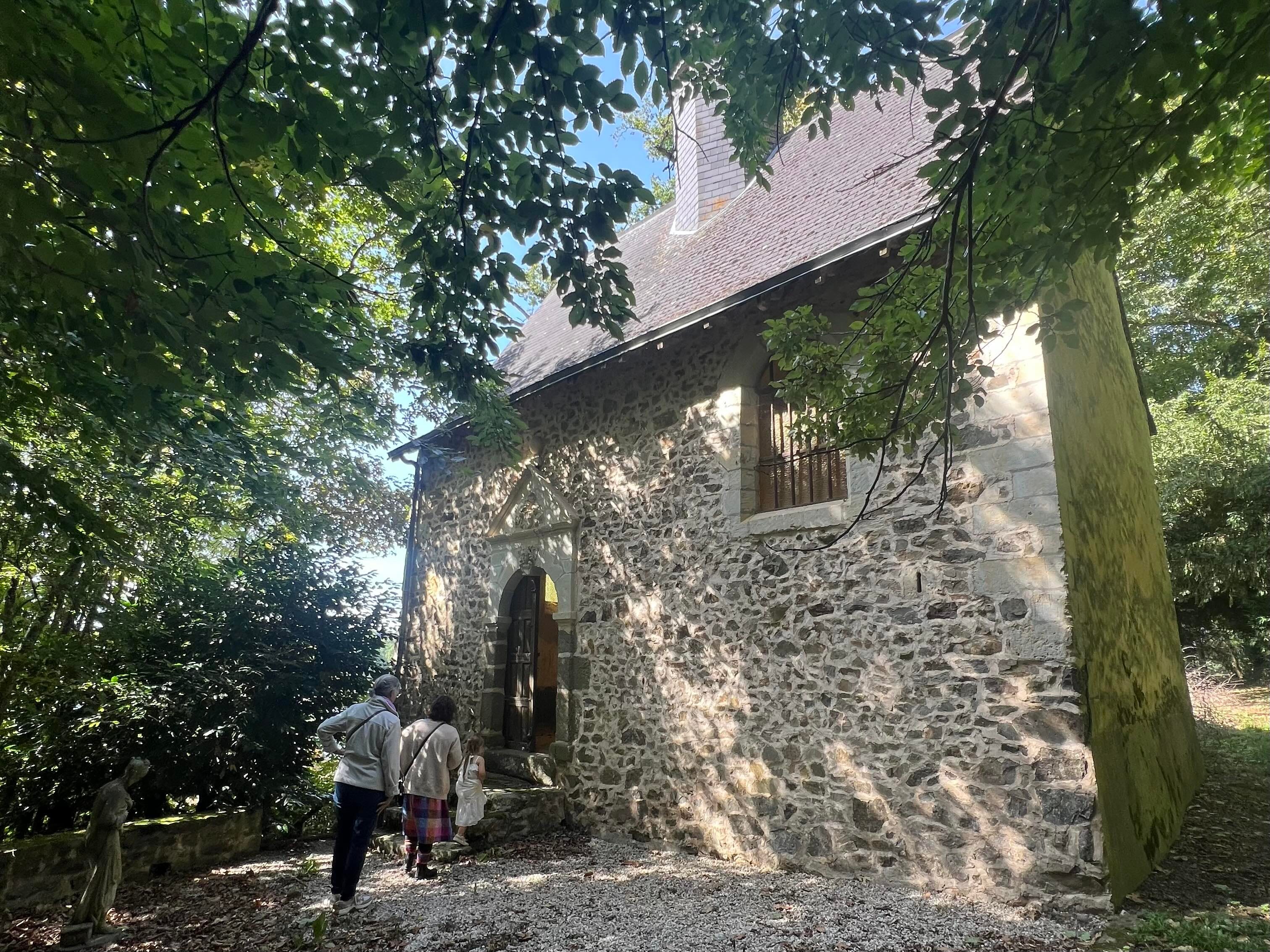
It’s also uniquely tucked inside our forest, which still feels surreal. You follow a trail through the trees, and suddenly there’s a chapel, as if it has been waiting there patiently for centuries.
And yes, the bell is still in the bell tower. The kids love to ring it by pulling on a giant rope that dangles all the way down to the ground, while I stand beneath it holding my breath and hoping it does not come crashing through the ceiling.
It’s one of the spaces that makes me feel the most humility, because you realize you’re not just improving your own home, you’re caring for a piece of history that could easily be lost if no one intervenes.
We don’t have illusions that we’ll restore everything overnight. But we do feel responsible to do it thoughtfully.
Stop 10: The Private Forest
There’s a private forest with trails running through it, and it’s one of the most special parts of the property, even if we’re still getting to know it.
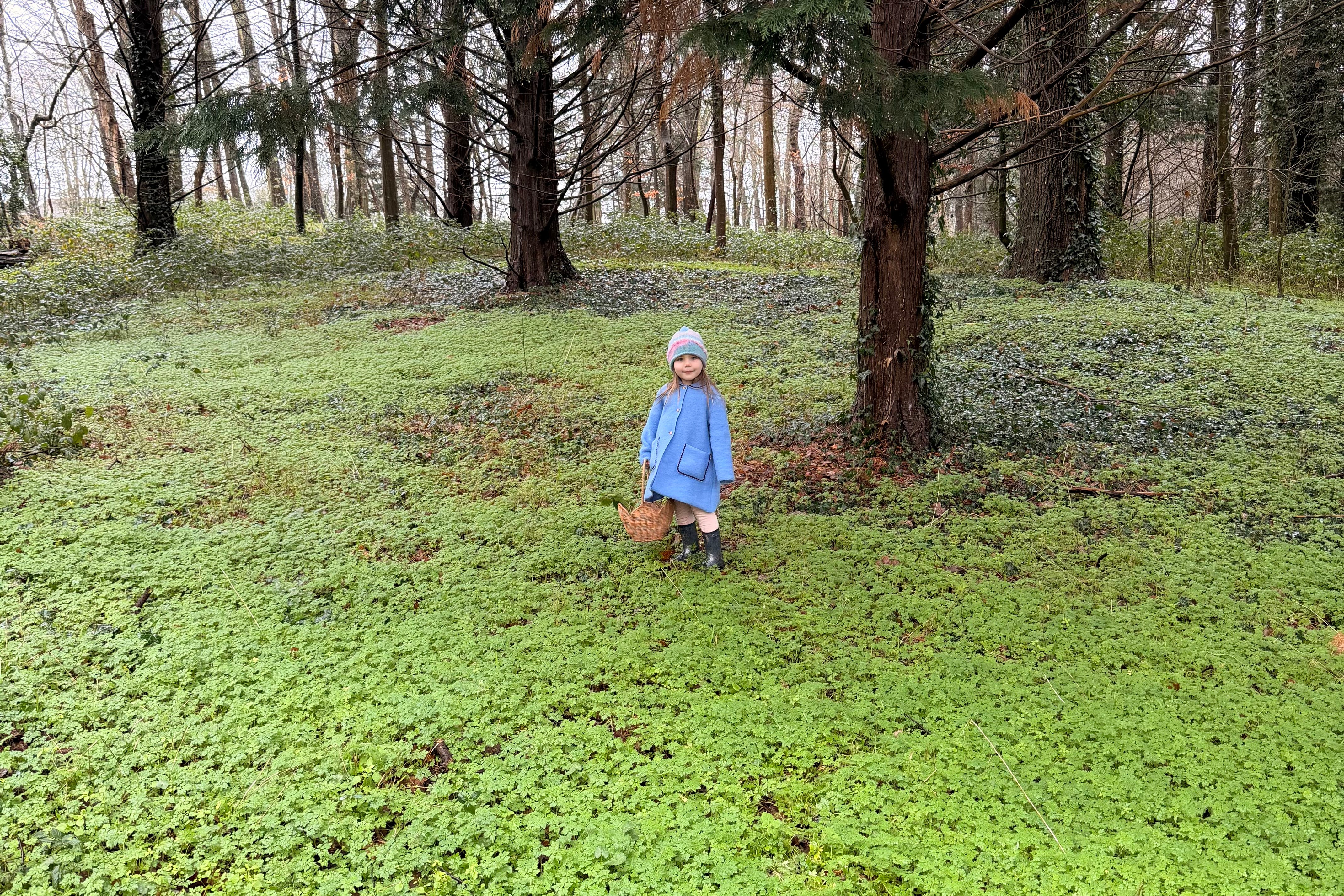
We arrived in winter, which means it’s been a little hard to “see the forest through the trees,” so to speak. With no leaves, it’s surprisingly difficult to identify what’s what. Everything is branches and silhouettes and mystery trunks, and I keep finding myself squinting like I’m about to be tested on it.
Over time, we want to bring the forest back to life in a thoughtful way. We’ll remove a few dead or dangerous trees, clear out some invasive brambles, and encourage more of the softer, storybook parts: ferns, mossy areas, and winding paths you actually want to linger on.
And apparently, in the spring, the forest is covered in bluebells.
We cannot wait :)
Stop 11: The Potting Shed + The Old Boulangerie
The potting shed needs restoring (which delights me), and the old boulangerie has the original oven, a detail that is both charming and slightly daunting, because it’s one more thing to steward properly.
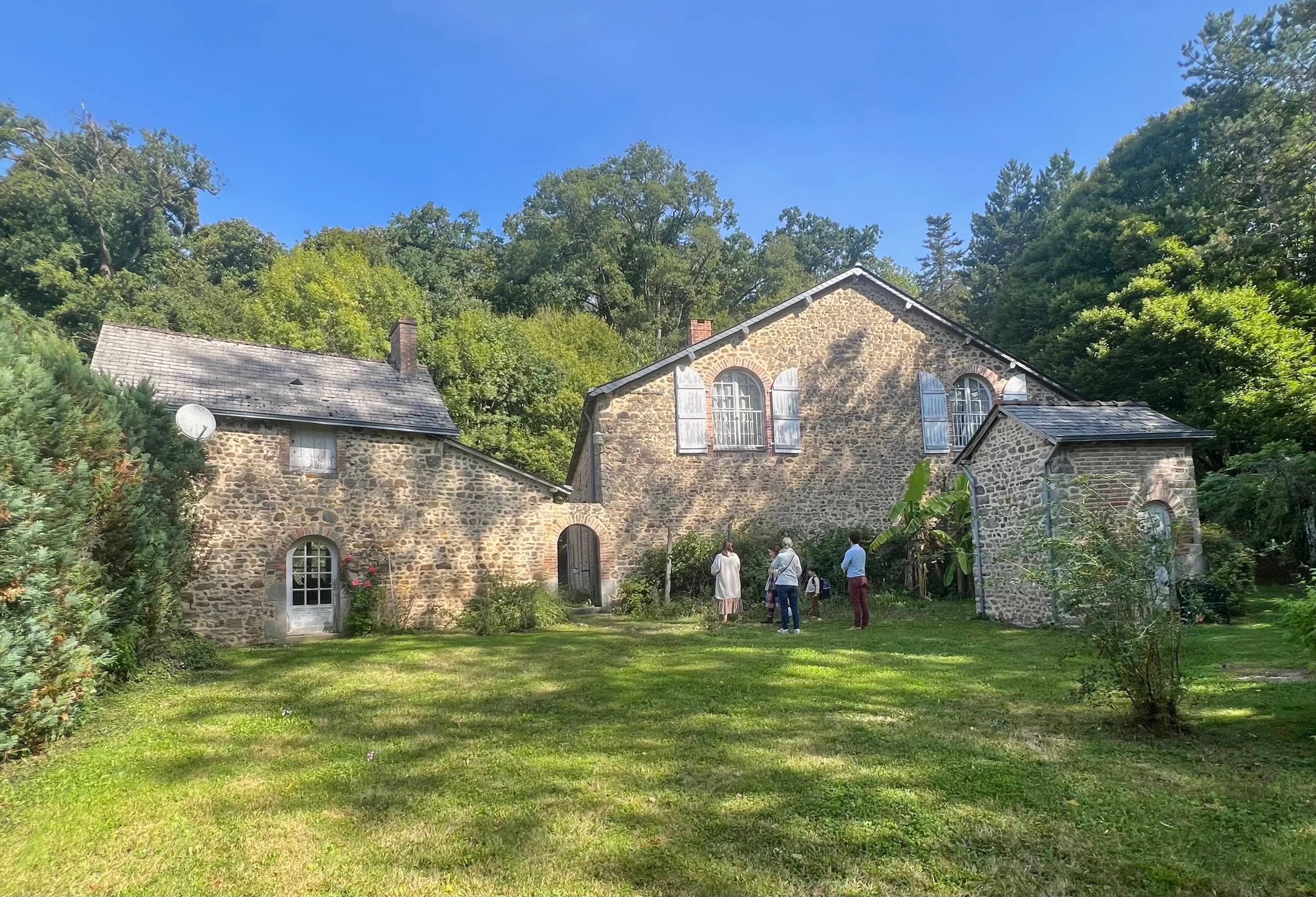
I’m learning that old properties are like that: they give you gifts, and they also give you responsibilities disguised as gifts.
Where We Are Right Now
This is the beginning. The “before.” The part of the story that doesn’t always photograph as cleanly as the after, but it’s the most honest part.
We’re excited, and we’re also trying to stay sensible. We’re learning. We’re making lists. We’re taking things one step at a time, and trying to enjoy the fact that, somehow, this is our life now.
In upcoming posts, I plan to share:
the bank saga (super dramatic/traumatic)
what our preliminary renovation plans are (emphasis on preliminary)
and why we chose this château over the others
For now, thank you for being here at the start. :)
À bientôt,
Kamille
A note for new readers: we’re an American family living in rural France, restoring a small château, and writing it all down here.
If you want the next chapter, subscribe free. If you want the deeper, unfiltered letters, and to closely follow our chateau renovation, you can upgrade to paid.
There’s so much potential! And I can’t wait to see the landscape evolve and to reveal more surprises.
Bonne chance! Such an impressive property with so much history, so much potential, and so many rewards waiting for you. 💜