


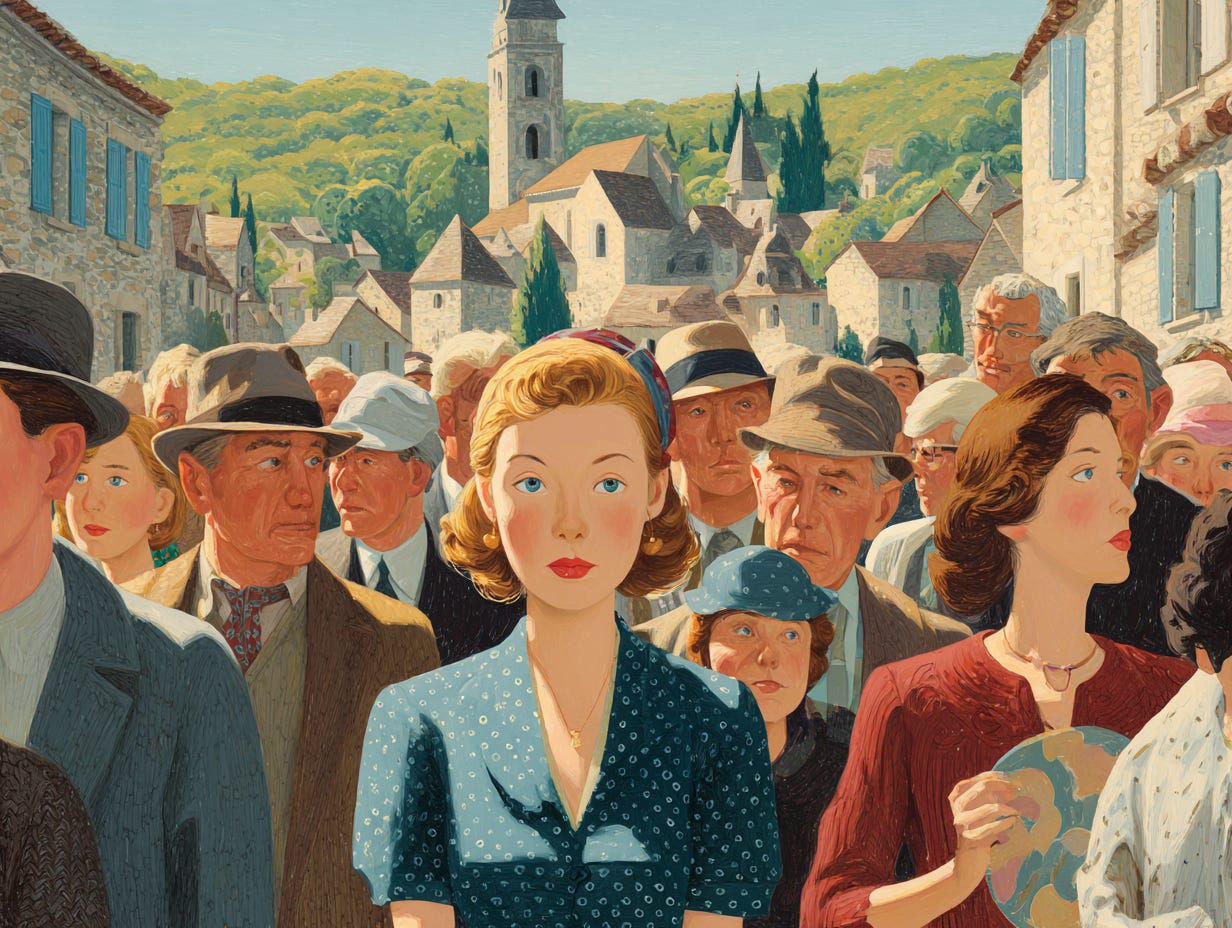
When we told people we were moving to France, the reactions fell into two categories:
Wow, I’m so jealous.
Good luck - the French won’t let you in.
It came packaged with other advice, of course. Like: “Everything will be closed on Sundays.” “Never touch the produce at the market.” And my personal favorite: “Bring your own salad dressing.”
But the warning about the people stuck with me. I heard it from blogs, books, and well-meaning acquaintances: The French are polite but private. You’ll always be a foreigner. You’ll never really belong.
I braced for chilly receptions and raised eyebrows. I pictured us stranded in some village square, waving awkwardly while the locals politely ignored us and continued eating their cheese. And to be fair, there were a few of those moments.
But now, two years in?
That couldn’t be further from our reality.
The Myth of the Unwelcoming French
Yes, French people can be reserved. They don’t do the American thing where you meet someone once and instantly call them your bestie. There’s less small talk, less bouncy hugs, and definitely less enthusiastic oversharing.
But beneath that reserve? There’s something else entirely.
Once the door opens - and it does open - the friendships are deep, loyal, and shockingly generous. These are the kind of friendships that show up with soup when your kid is sick. That offer to translate your insurance forms without being asked. That invite you in for an apéro and don’t bat an eye when you accidentally use tu too soon.
The Ice Breaks Differently Here
It’s not that the French are unfriendly. It’s that they don’t do performative friendliness - and that distinction matters.
In the U.S., we often confuse warmth with volume. We equate friendliness with instant rapport. We expect people to meet us at full enthusiasm, and if they don’t, we assume they’re cold.
In France, it’s quieter. Slower. More deliberate. You don’t get fifteen surface-level connections in a week. You earn one or two real ones over time.
At first, it was disorienting. When your French isn’t fluent, and your cultural reference points are a little…off, bonding takes longer. It’s hard to form a deep connection when your vocabulary tops out at Je voudrais une baguette and My cheese is crying (true story; not relevant).
But the more we showed up - awkwardly, imperfectly, persistently - the more the ice melted.
Who Let Us In
We’ve met the most incredible people here. People who’ve helped us find pediatricians, decipher government documents, and understand that crème fraîche épaisse and crème fraîche liquide are not the same thing, and if you confuse them, your tart will suffer.
There’s our neighbor, who helped schedule a doctor appointment for our son and then proceeded to meet us at the doctor’s office (40 minutes away) to translate for us during that appointment. The teacher who emails us in perfect English even though we never asked her to. The market fromager whose kid is in our daughter’s class and who always gives us an extra sliver to try.
None of them had to help us. But they did. Not because they were trying to be polite. But because they genuinely cared.
And no, not every interaction is a warm hug. There are grumpy bus drivers. There are impatient waiters. There are people who hear your accent and switch to English with a sigh. But show me a country that doesn’t have those.
What we’ve found here - when you move past the initial reserve - is a refreshing kind of realness. A friendliness that doesn’t need to perform. It either exists, or it doesn’t. And when it does, it lasts.
The Effort Is the Entry Fee
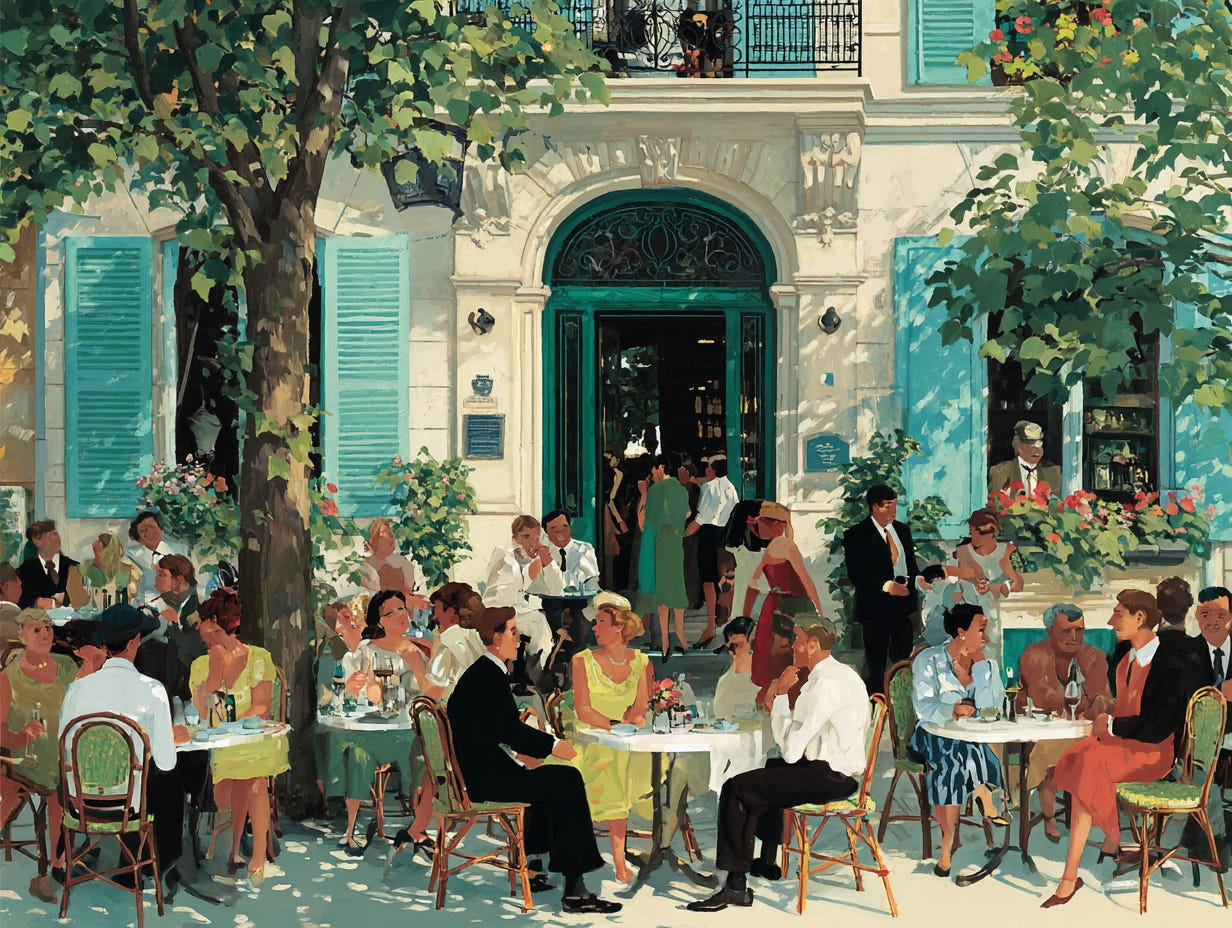
Here’s the thing: French people respect effort. They see you trying. They hear your mangled conjugations. They know you’re nervous. And they respond - not with condescension, but with quiet appreciation.
The difference is, they won’t praise you for trying. This is not kindergarten. You don’t get a sticker for ordering coffee in French. But if you keep showing up, they’ll meet you where you are.
We’ve made a point to build friendships with French people, not just tuck ourselves into the nearest expat bubble. And while we’ve met lovely English speakers along the way, the friendships that have rooted deepest are the ones built over mismatched grammar and a mutual willingness to try.
The Real Secret: Be Awkward Anyway
Learning to live here meant embracing discomfort. It meant asking dumb questions and laughing when we misunderstood. It meant bringing the wrong wine to dinner and accepting gentle correction.
But those moments? They’re where the magic happens.
Because slowly, the awkward gives way to something better - inside jokes, real conversations, true connection.
And it turns out, that’s the part no one warns you about.
Not only will the French let you in, they’ll keep you in, if you stay long enough to matter.
If you enjoyed this, subscribe for future chapters about life in France as a American. And if you’d like the renovation journal too, paid subscribers get full access to Castle Diaries, the behind-the-scenes documentation of restoring our château in real time.
À bientôt,
Kamille
Share this post with a friend who’s moving to France…or just trying to make friends anywhere.
Author’s Note:
To our French friends reading this: merci, merci, merci. You’ve made this feel like home, and no amount of conjugation mistakes will ever express how grateful we are.
I really wanted a sticker for ordering my coffee Kamille. Very funny!