


Three years in, I have become an unpaid cultural informant. I am almost always the only American at the table, which means that somewhere around the second bottle, someone asks me to explain my country and I discover I can’t. Not rudely. The French never ask rudely. They ask the way you ask about a place you’ve only seen on the news, which, for most of them, is the only place they’ve seen mine.
Some are funny. Some are not. Most are about things I'd never thought of as American at all, until the question itself made it obvious that everywhere else, people simply do it differently.
Here are some of them.
If you’re new here, welcome. I’m Kamille, an American writer living in a small château in rural France with my husband and two children. Once Upon a Castle is where I write it all down. What you’re reading is partly free.
The birthday party
For our daughter’s first birthday party in France, we went full American. We bought the wine, ready for the French parents. We cleaned the house (which mostly meant moving every visible pile into one room and closing the door on it). We set up extra chairs. We laid out enough food for a small wedding, because “birthday snacks” in the American dialect means a full dinner lightly disguised as crackers. We were ready for fifteen adults plus their children. We were so ready.
The first family arrived. The parents stayed in the car. They waved. The child got out, walked up to the door alone, and the parents drove away.
I decided it was a fluke. A scheduling thing. Then the second family did the same thing. Then the third. By the fourth I had stopped opening wine. By the sixth I was standing in my kitchen in front of three trays of charcuterie I had spent a morning assembling, doing the math. Did they coordinate this? Did we do something? Is our French worse than we feared? Have we offended a grandmother we haven’t met yet?
We found out that day that, in France, parents do not attend other people’s children’s birthday parties. The party is for the children. This is not a charming way of putting it. It is the literal job description.
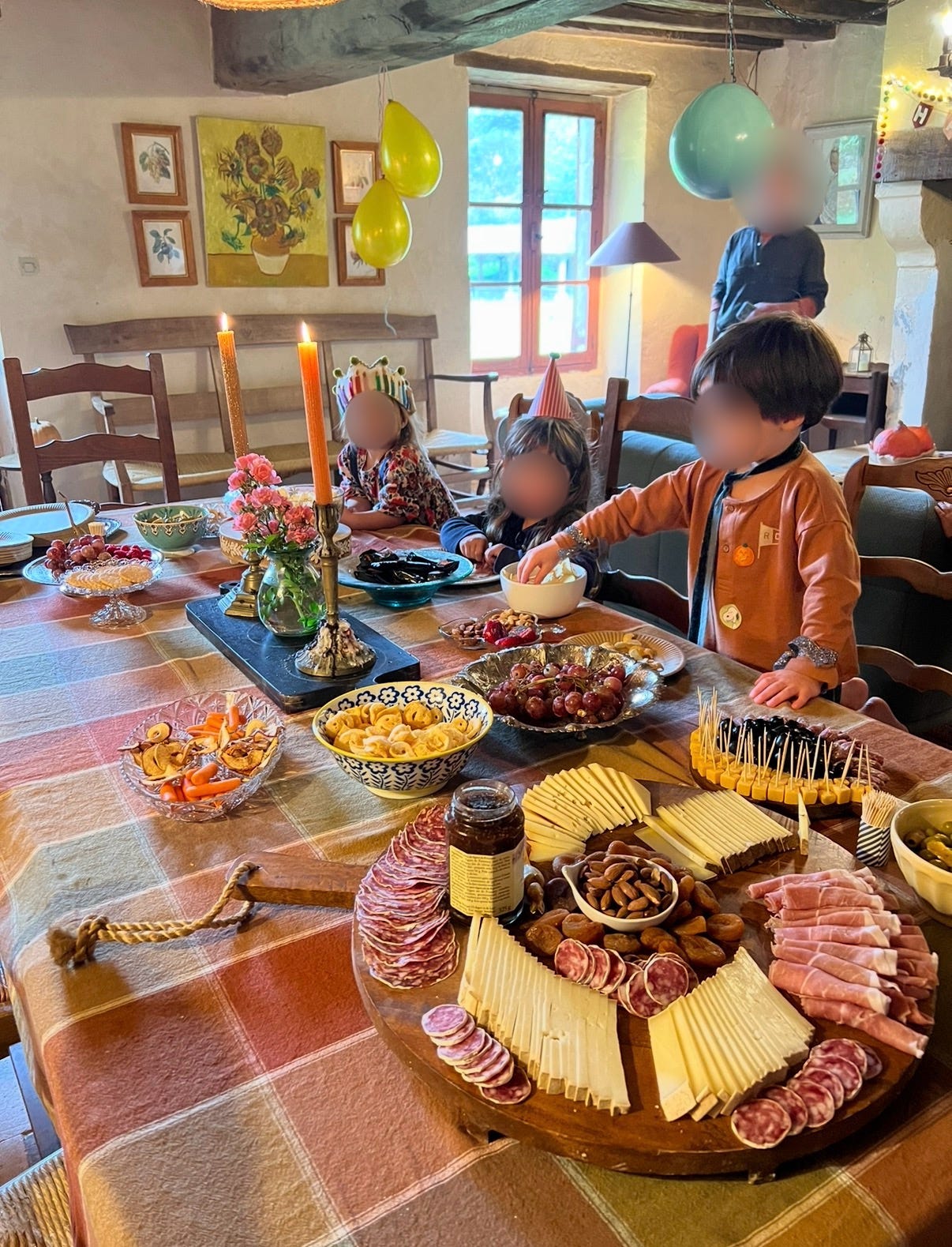
When I explained the American version later, my French friends asked (in the tone of people conjugating a difficult verb), but where do the parents go when they’re at the party? Are they with the children? Yes. The whole time? Yes. They considered this. And they eat? Yes. The children’s food? Yes. And the cakes? Yes. One of them looked at her husband and said something I’m fairly sure was the poor things.
We were the poor things. Nobody had told us.
The smile
Sean has a wonderful smile. I say this objectively as his wife and somewhat less objectively as the woman who married him partly for it. He smiles at cashiers. At neighbors. At the man at the déchetterie who weighs our garden waste. At dogs. In America this is so unremarkable that the only way to stand out would be to stop.
A few months in, a French friend pulled me aside, glanced around once, and dropped her voice to the register reserved for things you're not certain you should say. My husband wanted me to ask you something, she said. He’s been wondering - why does Sean smile all the time? She searched for the word. Is he…making fun of us?
No! I said. Sean is just American.
I said it like it cleared everything up. It cleared nothing up. She nodded politely and did not believe me. Later a different friend, who had clearly been drafting this conversation for weeks, explained the local physics. Smiling at strangers reads one of two ways here. Either as weak, in which case the merchant charges you more, or as smug, in which case people assume you know something they don’t and are enjoying it.
You should smile less, she told Sean, kindly, the way you’d mention he had spinach in his teeth. It’s my New Year’s resolution, he replied.
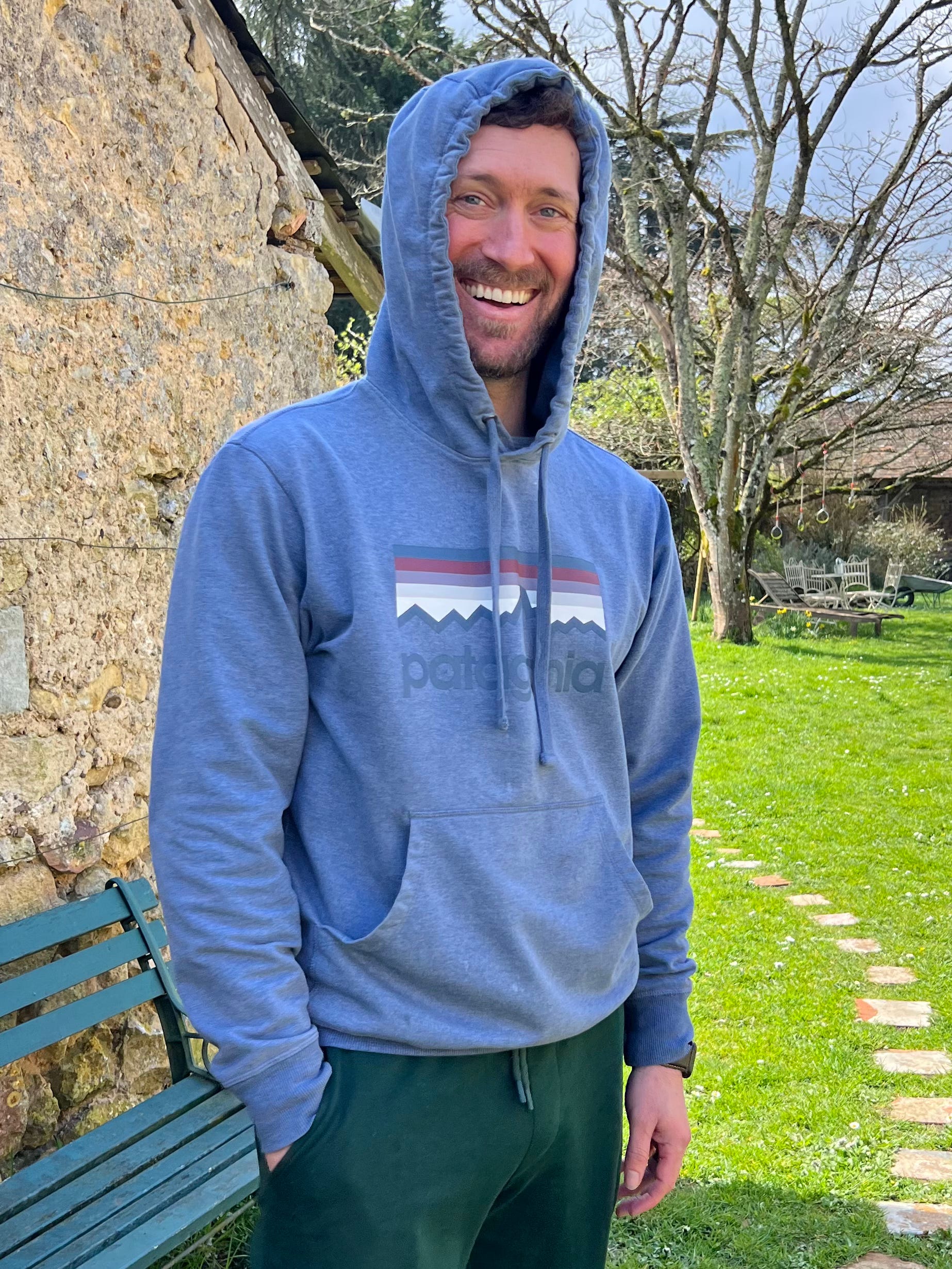
He has not smiled less. He smiles at exactly the same rate. The only thing that’s changed is that we now serve it with a small side of explanation from time to time.
We should grab coffee
A French mother at the school gates told me she’d spent a semester in Los Angeles in her twenties. She talked about the Getty. She talked about the Santa Monica Pier. Then, with a confusion that had survived two decades fully intact, she said: but I couldn’t make friends. Everyone was friendly. Everyone said let’s grab coffee sometime. I never heard from a single one of them again. Is that normal?
Yes, I said. I’m sorry, but yes.
I want to defend us, because we do mean it. We genuinely want to grab the coffee. The problem is the coffee has to be scheduled three weeks out, and by week three the calendar has Tetris-ed itself into a shape where the coffee is losing to a deadline, a school pickup, and a dentist appointment. So the coffee gets bumped. The coffee always gets bumped. We should really do that soon becomes next time you’re in town becomes a like on an Instagram post six years later.
It’s a strange way to be friendly, she said, and she was right, and she was being friendly while she said it.
The drugstore

Same woman, same conversation, one more. My host family sent me to the pharmacy, she said. They sent me to a place called CVS.
I waited, because I could feel it coming.
It was not a pharmacy. There was medicine, yes. But also lawn chairs. Toys. A wall of things for your hair. A refrigerator of sandwiches. A refrigerator of beer. The pharmacist was at the very back, behind a counter, like she was in witness protection. I had to walk through the whole store to find her. I felt like I had wandered into the wrong building.
The French pharmacy is a genuinely different category of object. It is small and bright and almost whispery. A green cross outside, a pharmacist inside, and maybe forty-five carefully chosen items on the shelves, every one of them medical, most of them recommended to you personally after three pointed questions about your symptoms. You do not buy a lawn chair there. You do not browse. You describe what’s wrong, you’re told what to take, you pay, you leave. The whole thing takes four minutes and has a strange dignity to it.
The American CVS, by comparison, is a fever dream. I had stopped noticing this. I'd stopped noticing it so completely that the first time I walked into a French pharmacy, calm and bright and the size of a living room, I was the one who felt like I'd walked into the wrong building.
The scheduling thing
I’ll spare you the full version of this one, because I’ve already written a whole essay about how French appointments arrive pre-decided. I'll only say that when Sean, freshly landed and still half in California, sent a French acquaintance his Calendly link, the man wrote back, having apparently registered the link as a decorative element, with one line: I am available Friday at 14h00. That was the email. No slot to select, no buffer, no acknowledgment that any link had been sent (he clearly had not viewed it). He had named a time he would be free, on the assumption that Sean, if also free, would appear, and if not, would say so. He was, of course, completely right. We had brought a small piece of American scheduling infrastructure to a country that examined it, found it unnecessary, and returned it to sender.
These are the easy ones. The ones I can tell at a dinner and everyone laughs, including me, because nobody at the table has to defend the American version. The drugstore is the drugstore. The smile is a lot. We can all agree.
There’s another category. These come later, after the kids are in bed and the wine has been refilled and the conversation has drifted somewhere that, in America, you'd have been raised to steer it away from at a dinner party. They’re asked more carefully. Lower voices. They’re the ones where my friends actually want to understand, and where I don’t always have a good answer, and where I’ve heard myself start to explain my whole country and stop halfway through because I’d lost the thread of it myself.
Those are below.
The rest of this essay is for paid subscribers. It’s the half where the questions get harder and I get more honest: the one about my children’s schools that I answered faster than I meant to, the dinner where a French couple put down their forks, and the single question I have never been able to answer. Paid subscribers also get two extra essays like this each month, plus Castle Diaries, where I document the renovation in real time. If you’ve been on the fence, this is a good one to climb down on.
