


In Los Angeles, fall usually arrived as a beverage. First the pumpkin spice latte came back. Then a candle called something like Harvest Cashmere showed up at Target. Then it was 85 degrees F on Halloween and everyone wore a chunky knit anyway, in blissful (and sweaty) rebellion.
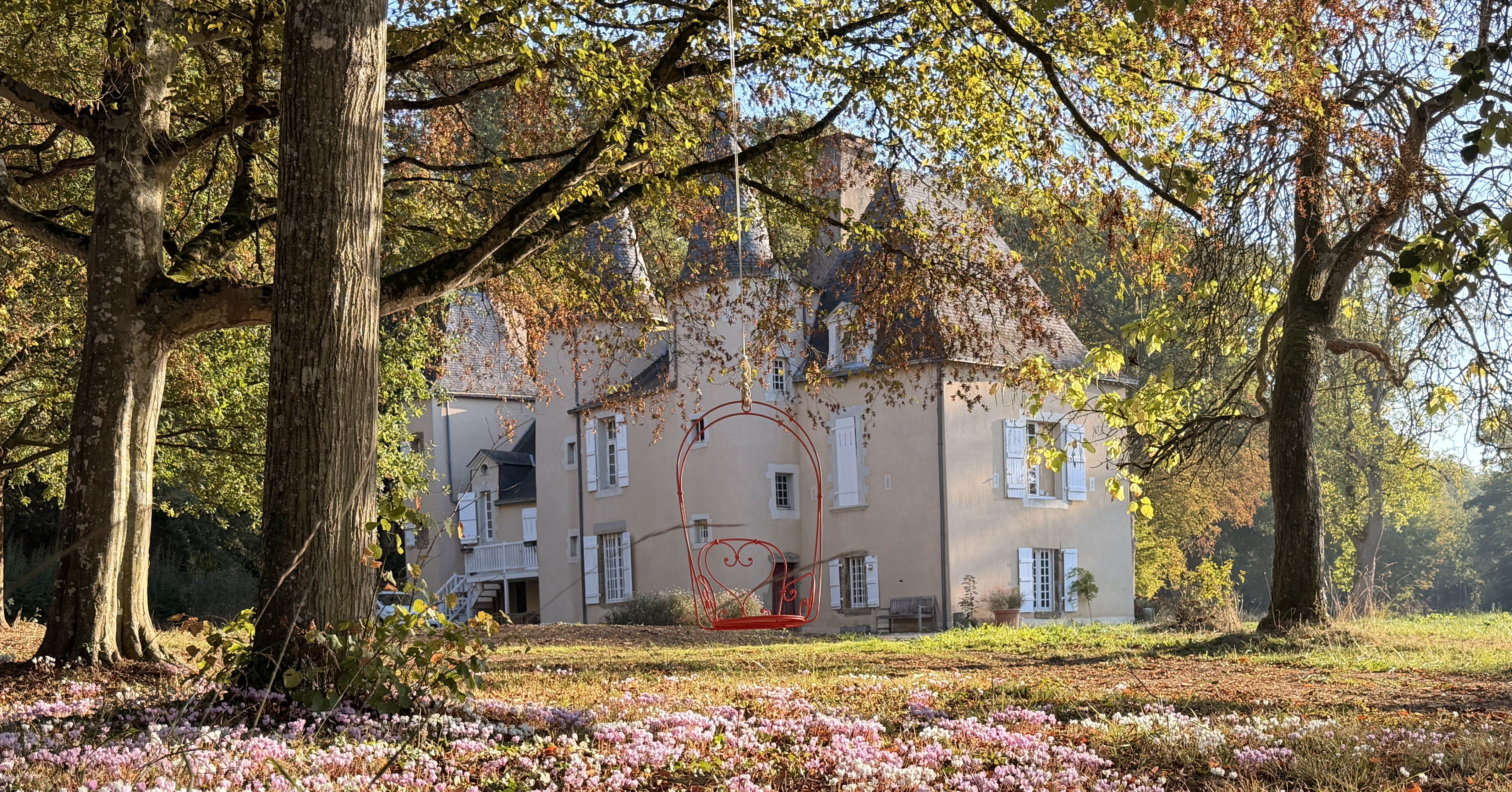
We now live in a petite castle in the northwest of France, where the seasons are real, which is one of my favorite things about living here. Summer doesn’t just ‘switch off.’ You really get to watch it slowly turn into fall, in a hundred small ways. This is our fourth autumn here, and I still notice every single one of them, and treasure them.
I’m aware that ‘autumn in France is lovely’ is not breaking news. But nobody ever mentioned that part of it involves learning which chestnuts will poison your kids, so I think there’s still a little room.
Here are the small and lovely things that tell me autumn has arrived in France.
If you’re new here, hello! I’m Kamille. We’re an American family who moved to rural France and then, against all reasonable advice, bought a small château. The essays here are free, and I’d love to have you along.
1. The light changes (and then the fog moves in)
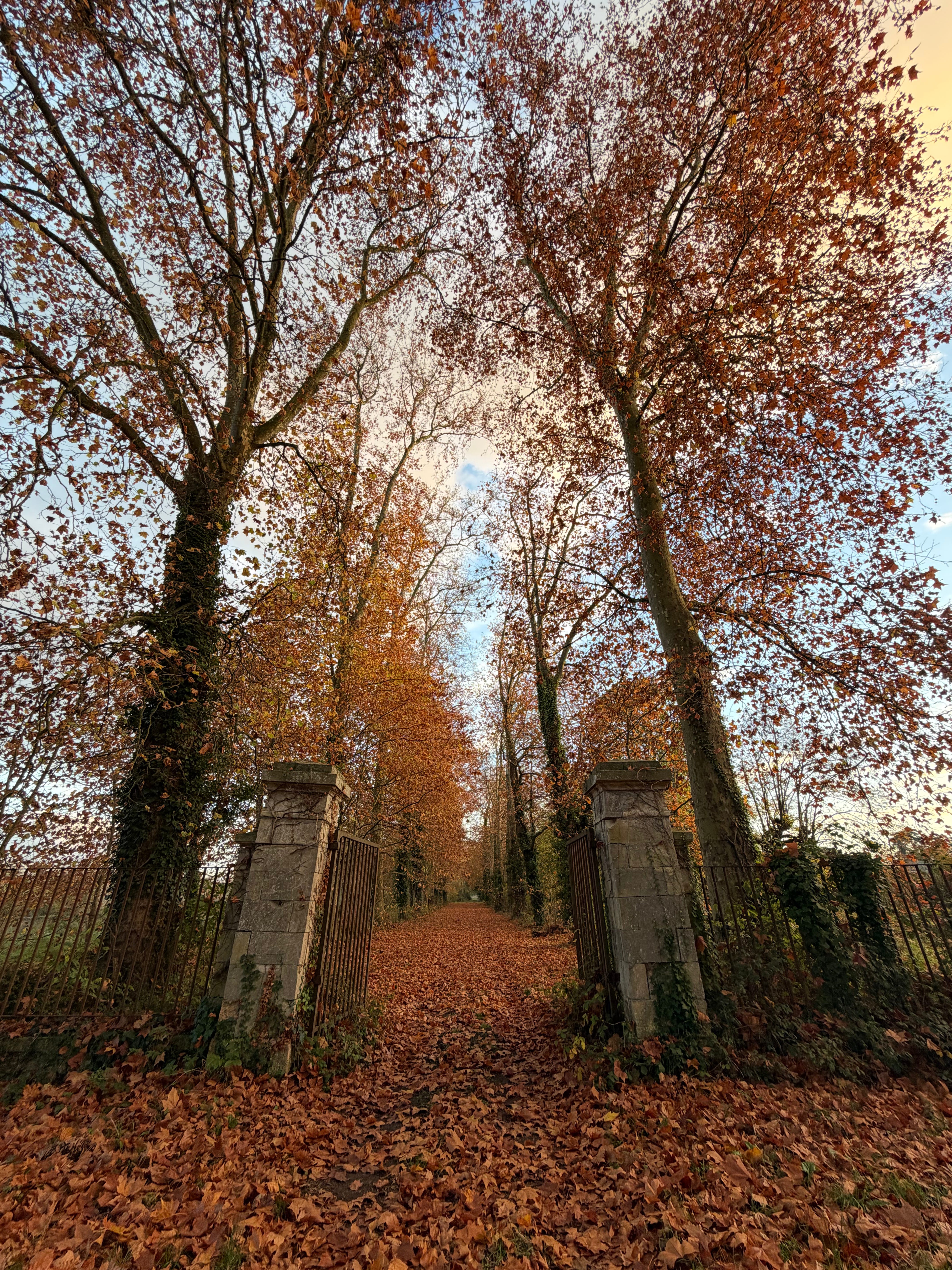
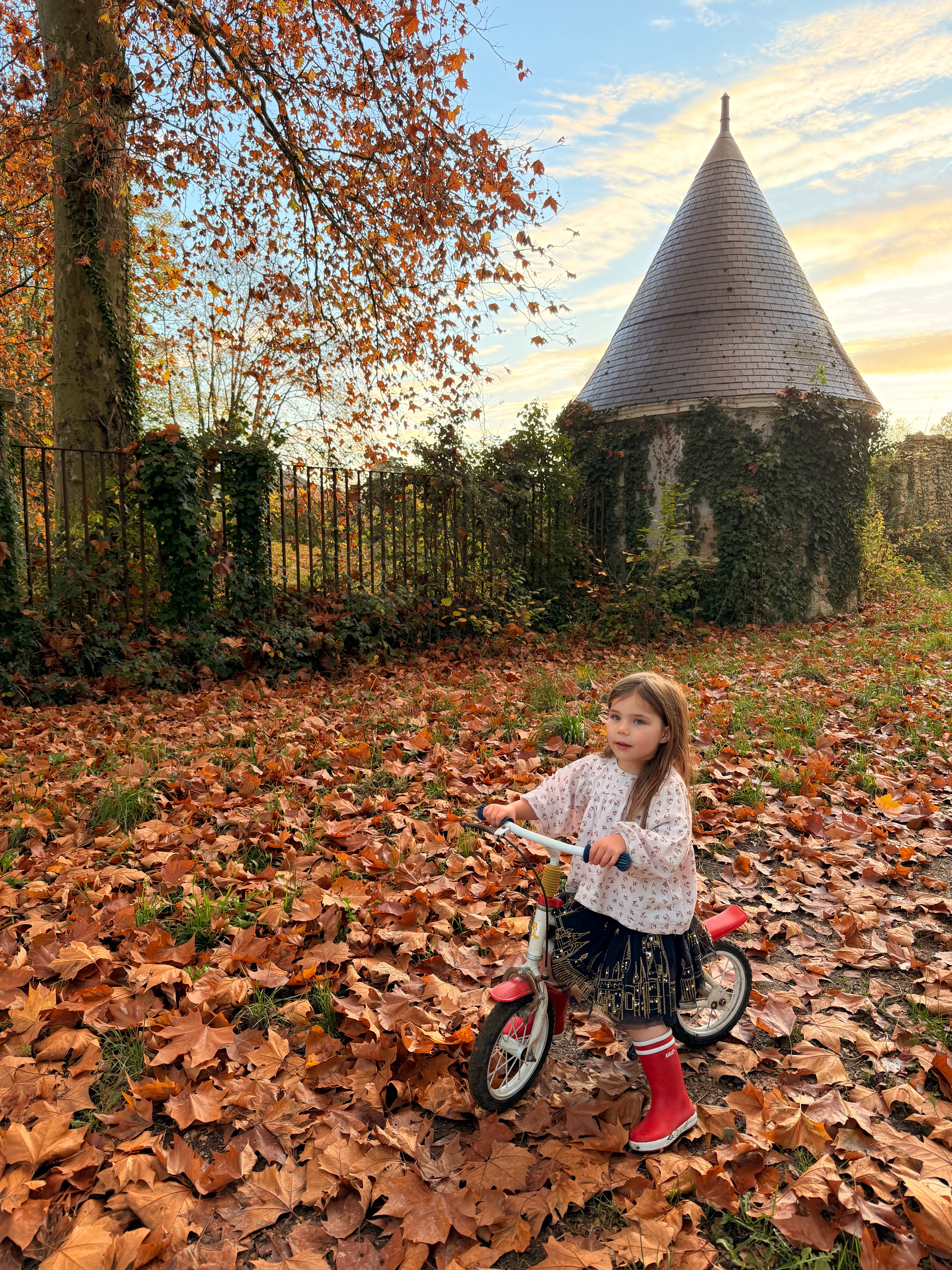
France is famous for its autumn light, and it earns the reputation. The angle sort of shifts, and everything turns a little gold around the edges.
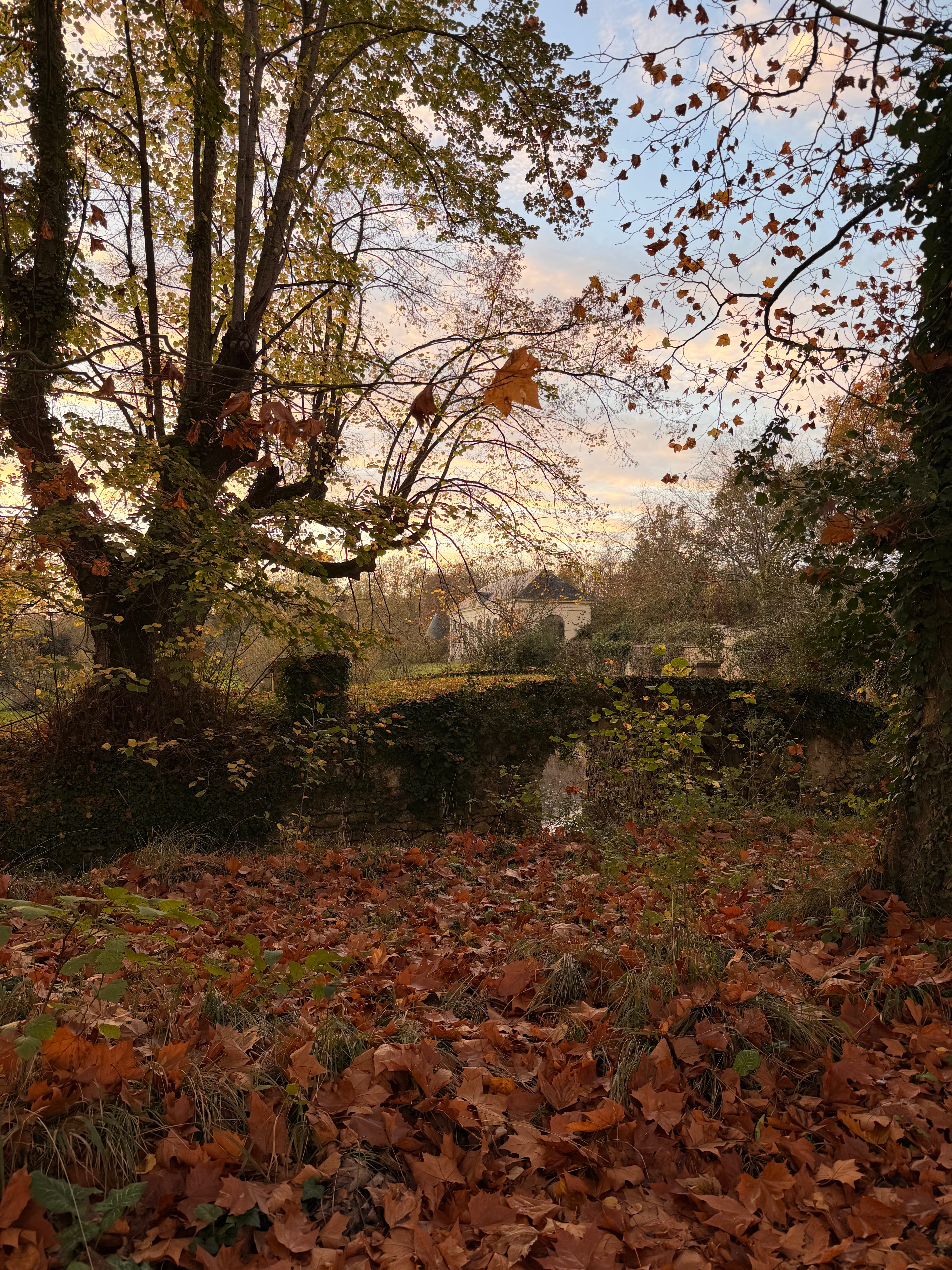
The trees change color properly here, similar to the East Coast in the U.S. You feel the temperature start dropping (especially at night) and the days get shorter, calling for more evening mood lighting and candles. And then the leaves start to fall. When there’s a soft breeze, they drift and spin down so slowly that they look almost like little gold stars falling out of the sky.
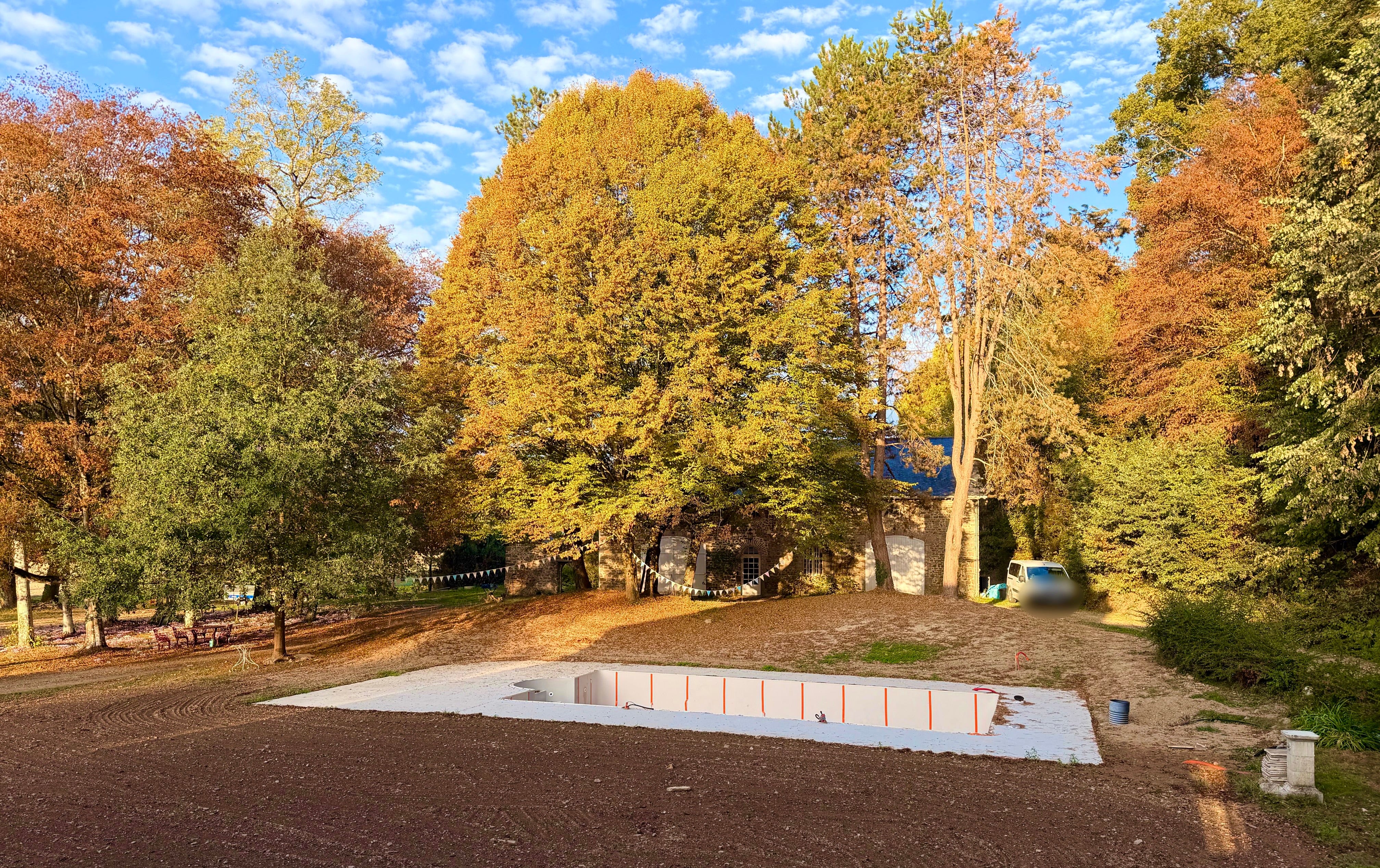
And then there’s the fog. Last week, when we took the kids to school, it was sitting halfway up the trees, as though someone had set it down carefully and forgotten to come back for it. All four of us were marveling at it. It looked like we’d driven into a magical land, and it made the 6-minute school run quite mystical.
Then today we lit our first fire of the year, which really feels like the official arrival of fall. Autumn has officially entered the building, cozy season has begun, and there is no going back to sandals.
2. The cyclamen appear
Ah, the cyclamen. The flower that gives you a little boost of magic just when you’d stopped expecting any.
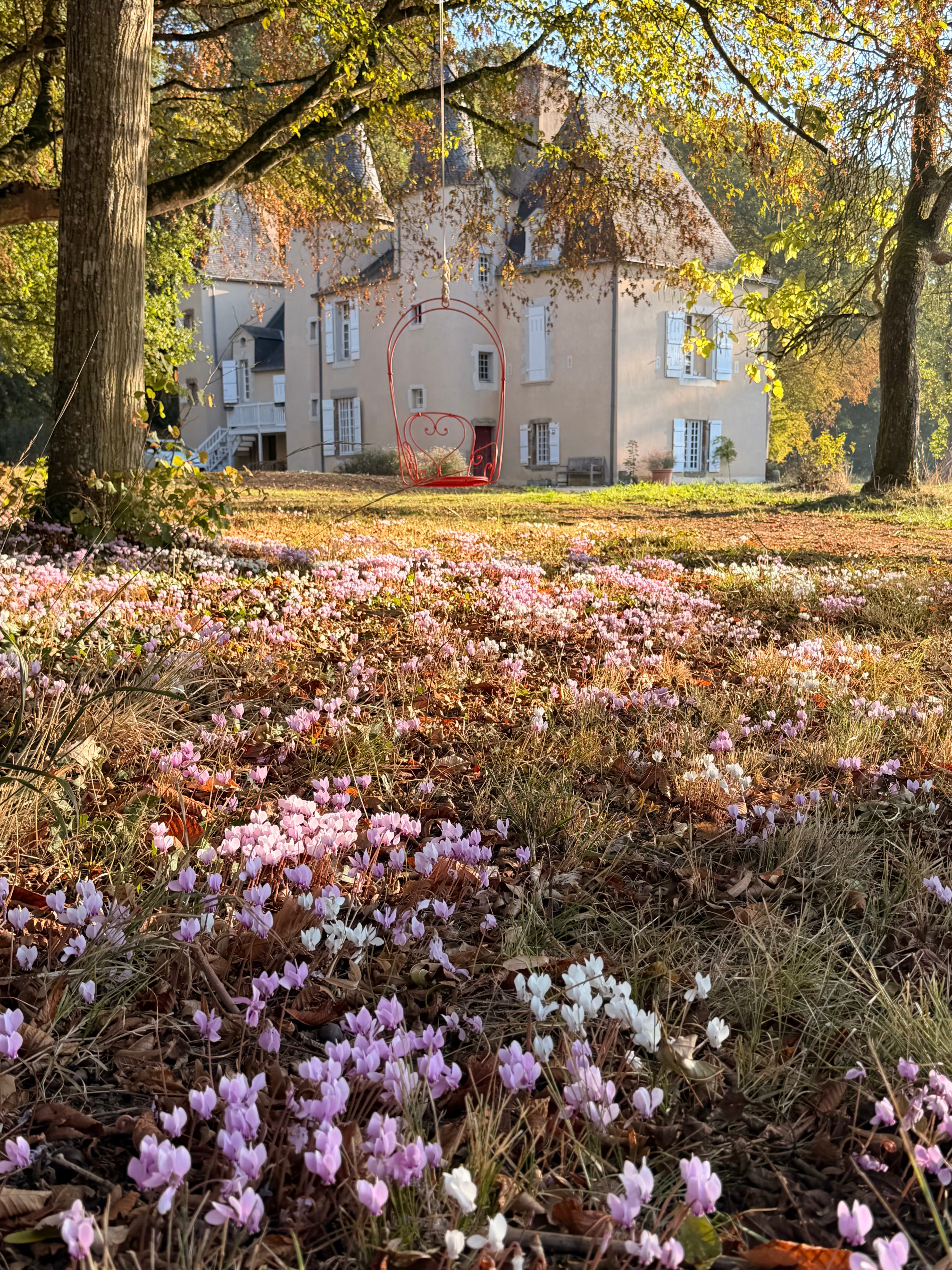
I’d never noticed cyclamen before moving to France. We arrived three years ago in August, so we skipped the gentle introduction and went straight into fall. We were renting a farmhouse on the grounds of a château, and one morning in late September I looked out our bedroom window and there was a small carpet of them under the trees.
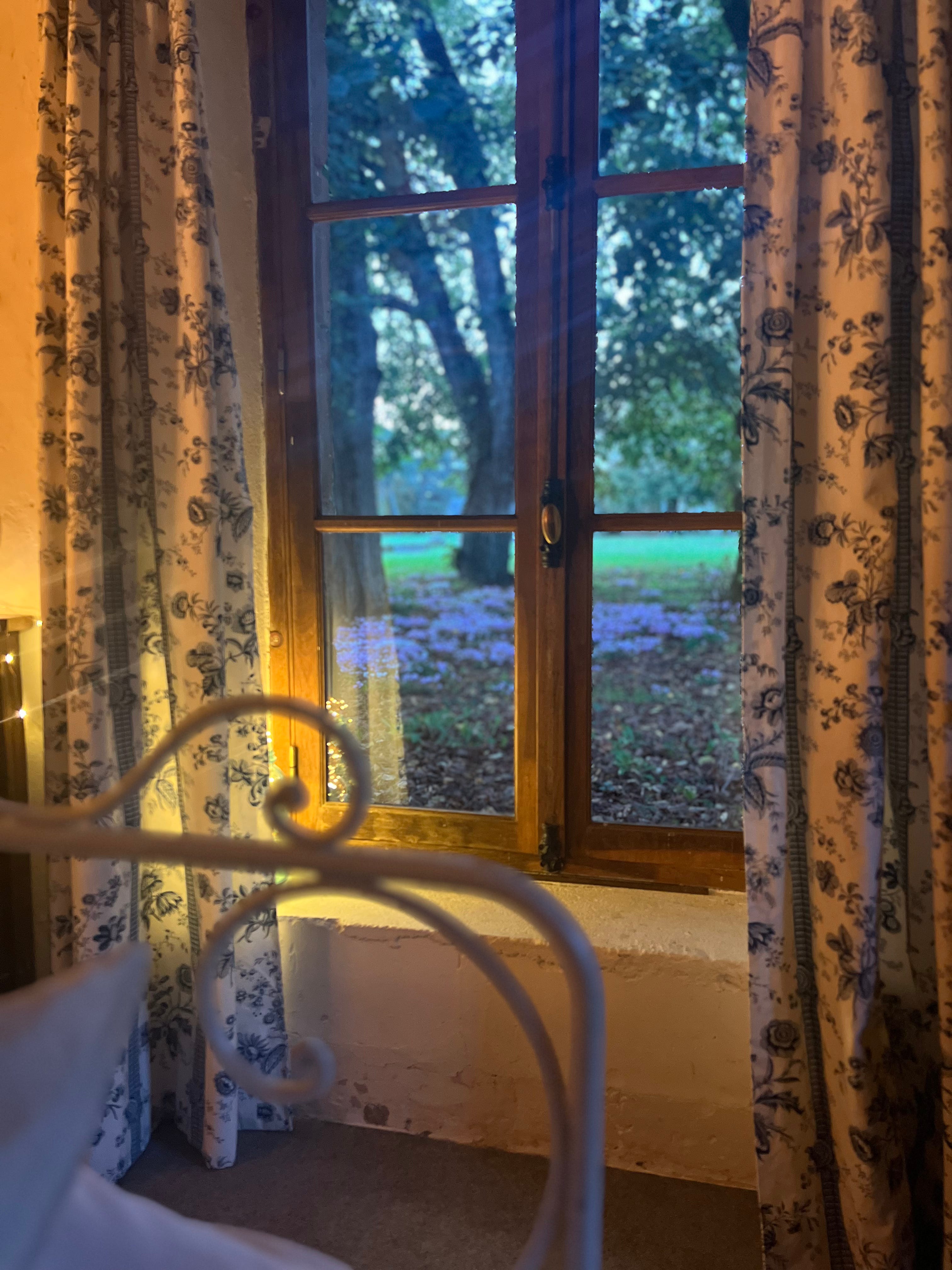
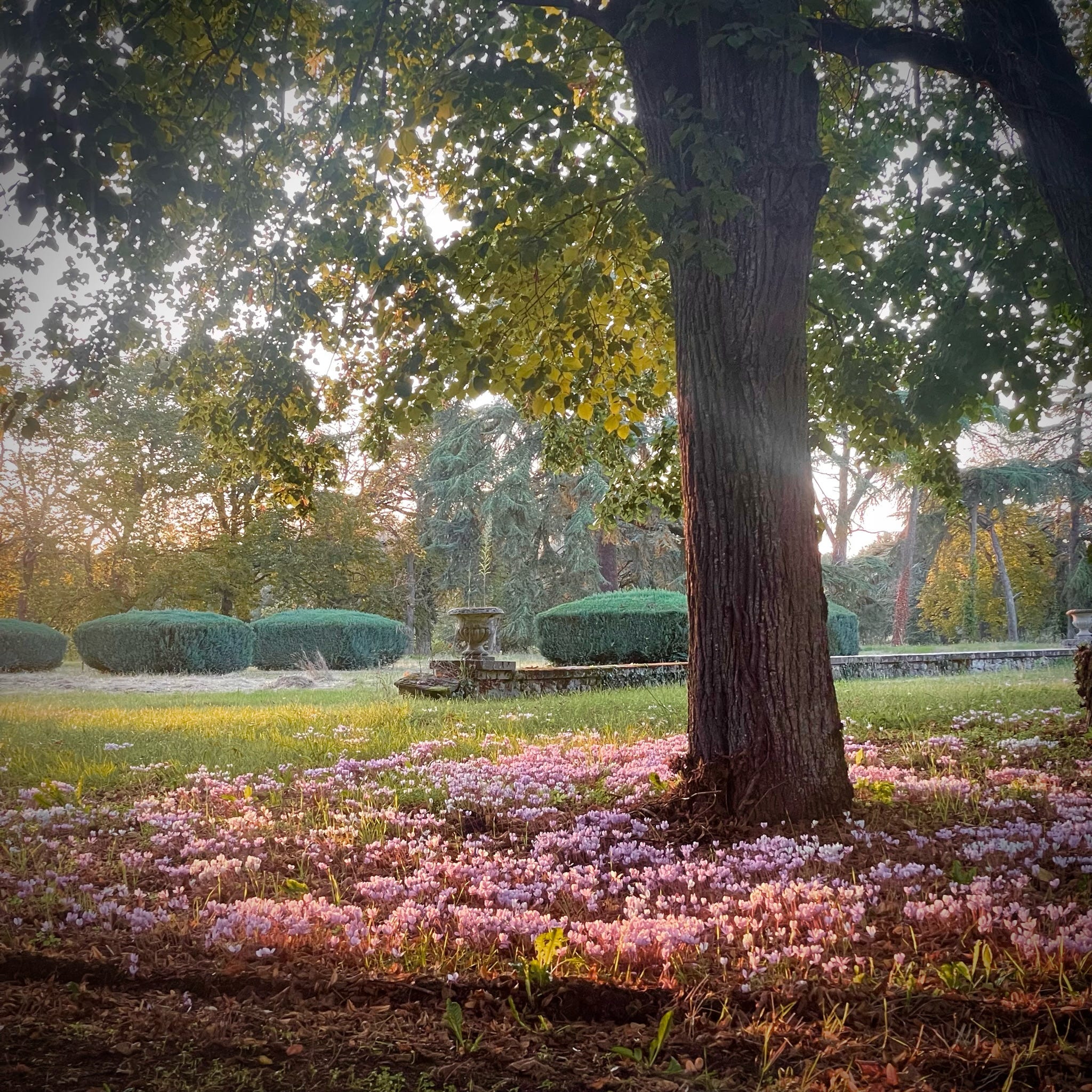
They’re low and delicate, in purples and pinks and whites, and they love the shade, so they tuck themselves under trees and make themselves comfortable between all the fallen leaves. All year long you would have no idea they’re there. Then every other flower in the garden says its goodbyes for the year, and that’s when the cyclamen decide to make their entrance.
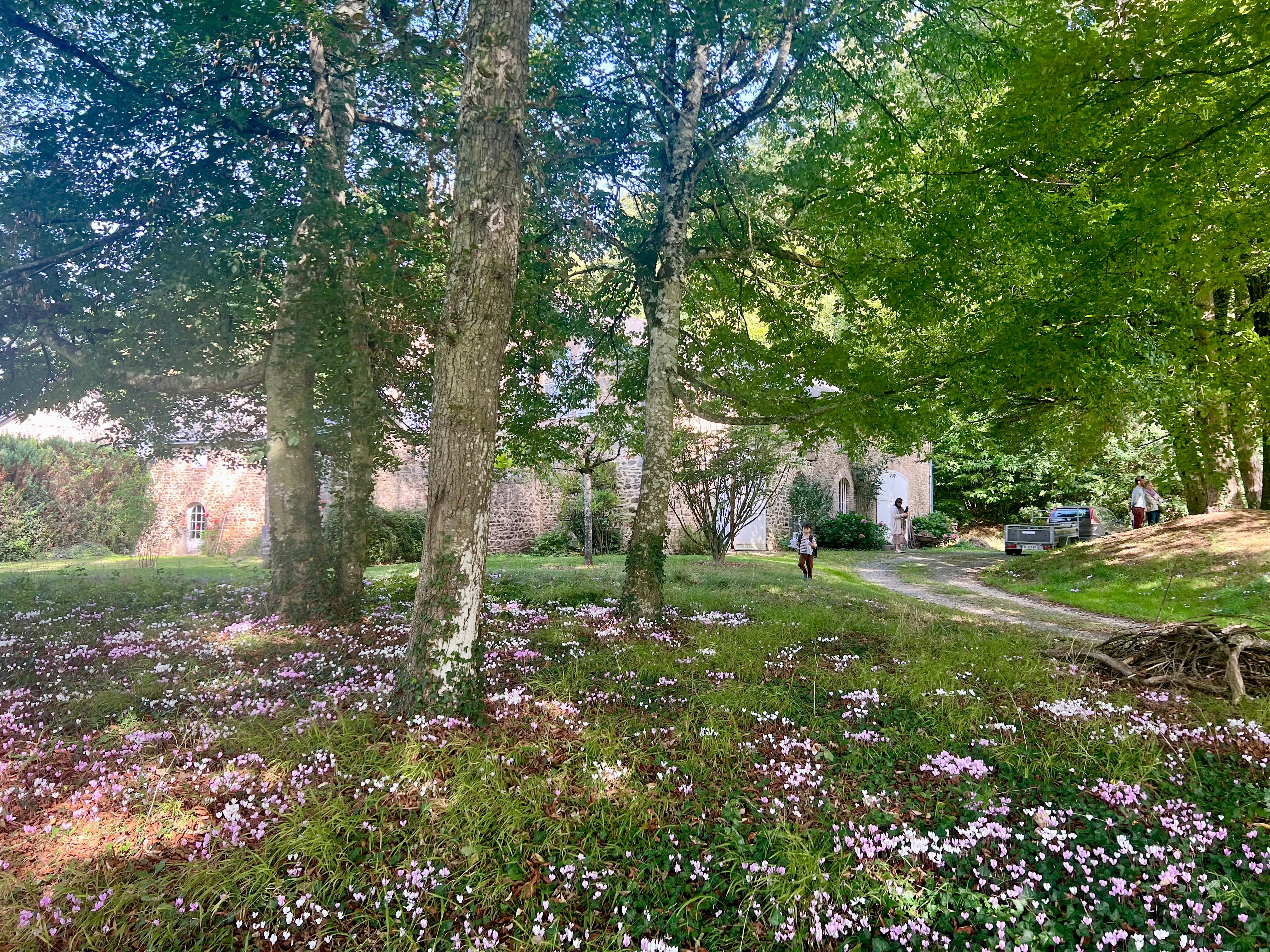
When we first came to see our château, it was September, too. There was a patch of cyclamen blooming under some trees by the house, and we were delighted out of all proportion. One of our favorite little delights of the farmhouse was going to be at our château too. It felt like the château had called the farmhouse for a reference.
3. The apples (best of my life, no contest)
France’s tourism board calls the apple the star of autumn, and I’m a big fan of the nickname. It’s apple-picking season here, and the best apples I have ever eaten in my life were French. Truly - hands down. It isn’t even close.
They came from the walled garden next to the farmhouse we rented before we bought the château. It was an incredible garden, and it had so many apple trees, of every variety you could think of. In our second year we finally ventured out to pick some, and then we simply could not stop eating them. Apples for breakfast, apples for lunch, apples at dinner (which is not a meal where apples usually get a speaking part). Sean made applesauce, several times. When my in-laws came to visit, my mother-in-law made an apple tart that was, and I don’t use this phrase lightly, to die for.
Our own apple trees at the château didn’t produce this year. They’re…thinking about it. In the meantime, the shops fill up with apple desserts and the cider comes out, and this part of France (northwest) takes its cider seriously enough to make Martinelli’s look like a juice box.


4. Chestnuts everywhere (and the other chestnuts)
Some of this is our region, but in the fall and winter there are chestnuts absolutely everywhere. Chestnut trees are hugely popular in France: in cities, in forests, along roads, everywhere. Recently we were in a completely random parking lot in our nearest city, grabbing groceries, and our daughter just started collecting the chestnuts all over the ground, lifting the bottom of her dress to make a little carrying hammock for them (because she had too many to simply fit in her hands).
In our very first fall in France, our landlord at the farmhouse took us on a mini adventure into her woods to gather chestnuts. We brought baskets, put on our rain boots, and ventured out. It was so beautiful, and it was also where I learned (at the age of 30-something), that there are two kinds of chestnuts and one of them will make you very sick. Until then, my entire chestnut education had come from Nat King Cole and a pouch of roasted, peeled ones from Trader Joe's.
The one you want is the châtaigne. It grows inside a husk covered in long, dense spines, (like a very small, very angry hedgehog), and inside there are sometimes a few nuts packed together, flattish on one side, with a little pointed tip. The one you don’t want is the marron d’Inde, the horse chestnut, from the big ornamental trees you see in parks and town squares. Its husk has shorter spikes spaced further apart, and inside there’s usually just one round, glossy nut that looks so perfect and so edible you feel almost betrayed when you learn it’s toxic.


To make this more fun, the roasted chestnuts sold on street corners are called marrons chauds, the sweet chestnut spread in the jar is crème de marrons, and both are made from châtaignes. Meanwhile, the poisonous ones in the park? Everyone calls those marrons too.
Our landlord had one more instruction. You have to gather them at exactly the right time, she told us, because if you wait too long, the sangliers will eat them all.
Sangliers are wild boar. They’re very real, they’re very fond of chestnuts, and they’re about to become relevant.
5. La chasse
The château behind our farmhouse had a large private forest, which we'd been wandering through freely for weeks. Then, in early October, our landlord sent us a text: Don't walk in the woods today. La chasse has begun.
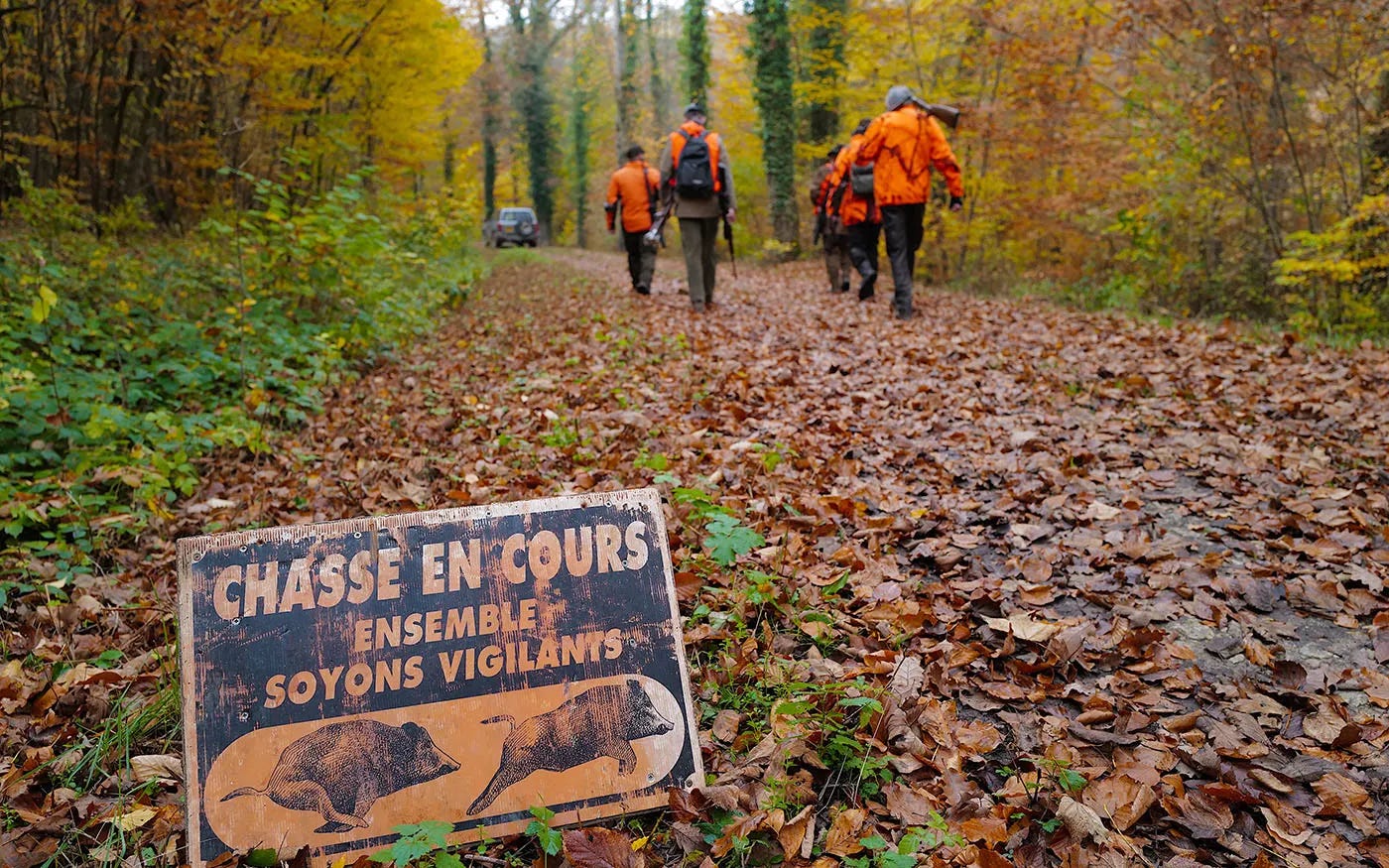
We had no idea what that meant, so we did what any reasonable person does with a cryptic message from their landlord - we Googled it. And we discovered that la chasse (literally, the hunt) is hunting season, and in rural France, it is an institution.
And then, pretty soon, we saw it ourselves. Right next to the farmhouse, a crew showed up: about ten men, middle-aged to older, in orange vests and flat caps and tall rubber boots, guns slung over their shoulders, hunting dogs everywhere.
They were out to get the sanglier, which France actively encourages. The wolves that once kept them in check disappeared from most of the country about a century ago, the wild boar population has exploded since, and they have very strong feelings about other people's crops (they do tens of millions of euros of damage to farmland every year, and they cause around 30,000 road collisions a year).
Once you know about the hunt, you start seeing it all over the forests here, mostly in the form of miradors, the raised wooden hunting seats that look like lifeguard towers that wandered into the woods and decided to stay. Baywatch, if everyone were waiting for a pig.


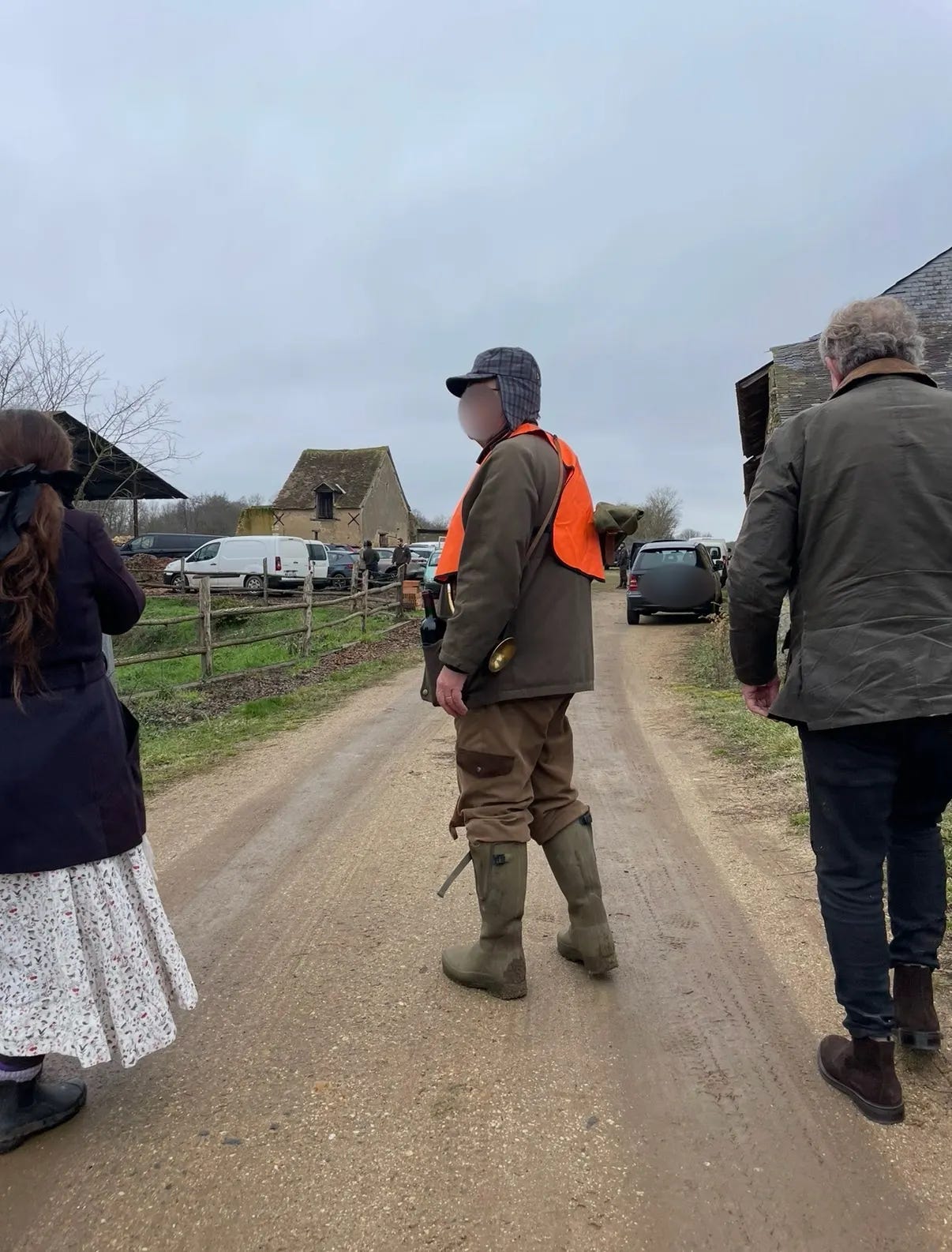
In our second year, Sean and I were invited to a hunting lunch at someone’s farmhouse. We felt extremely out of place (partly because we are not hunters and partly because we are Americans, which meant we had dressed for a nice lunch). Everyone else was wearing their actual hunting clothes (quite charming, in a muddy, tweedy, dirty-chic sort of way). We stood out like a pair of sore thumbs in our stylish fall apparel.
It was cold outside and cozy inside, with a lovely autumn atmosphere. There was a lot of wine and a LOT of meat (served mostly with a side of meat). We fumbled our way through entirely French conversations and ended up having a truly nice time.
Castle Diaries is where I take you inside the château: the rooms we're restoring, the before-and-afters, the decisions we're making and the ones we got wrong. Two posts a month, for Supporting Members.
6. A mushroom with a very unfortunate name
On one of our early walks through the forest by the farmhouse, we came across a giant white mushroom, unlike anything we’d ever seen. When we pointed it out to our landlord, she picked it, handed it to the kids, and announced: “Pet de loup. It’s delicious.”
Pet de loup means ‘wolf’s fart.’
I went looking afterward and learned that its official name is vesse-de-loup géante, which is somehow worse, because a vesse is specifically the silent kind. A giant, silent wolf fart. Yum.
We had only recently arrived from the faraway land of Los Angeles, where mushrooms are not exactly springing up out of the sidewalks, so we were skeptical. After a LOT of careful research on identifying it and making sure it was safe (it's a giant puffball, and it's only edible when it's young and pure white all the way through), Sean cooked it up. It was actually quite good! The kids don’t really like eating it, because they don’t really like eating any mushroom, but they love the name.
(Please don’t take any of this as mushroom advice, as I am not a mycologist. I’m a mere baby gardener).
What we know now is that we could have just taken it to the pharmacy. Yes, the pharmacy. In France, pharmacists study mushroom identification as part of their training, and plenty of them, especially out in the countryside, will look through your foraged basket and tell you what’s safe to eat. Not every pharmacist is a mushroom expert, but the ones who aren’t sure will tell you not to eat it, which is also an answer.
So next time, that’s exactly where our mushroom is going. Maybe we’ll pick up some cough drops while we’re there.
7. The oysters come back
Sean loves oysters. Every so often he comes home from the local market with a bag of them and a few lemons, please as can be.
Recently, a neighbor gave as the oyster dos-and-don’ts breakdown. In France, you’re only supposed to eat oysters in months with the letter r in them. September through April, yes. May, June and July, absolutely not. (August also has no r, which the neighbor didn’t bother to mention, presumably because nobody in France is home in August anyway.)
The logic is that summer is spawning season, when oysters go laiteuses, milky, which sounds exactly as appealing in French as it does in English. And before refrigeration, warm weather plus shellfish was a reliable way to lose a week of your life. Researchers have even found ancient shell piles on an island off the coast of Georgia, of all places, showing that people were already skipping summer oysters around 4,000 years ago. So the rule is older than France, and it reached us via a neighbor, which I suppose feels like the correct chain of custody.
Modern oyster farming has mostly solved the problem, but the rule doesn’t care. September arrives, the r comes back, and so do the oysters, building steadily toward Christmas, when oysters are on practically every French holiday table. France eats something like 70,000 tonnes of them over the holidays alone (which means also a staggering number of lemon wedges).
8. Everything starts to simmer
Fall is the season of plats longuement mijotés, all of the long, slow-cooked French dishes: pot-au-feu, blanquette, daube and, of course, bœuf bourguignon. The soups come back, and every kitchen smells like someone has been cooking for six hours.
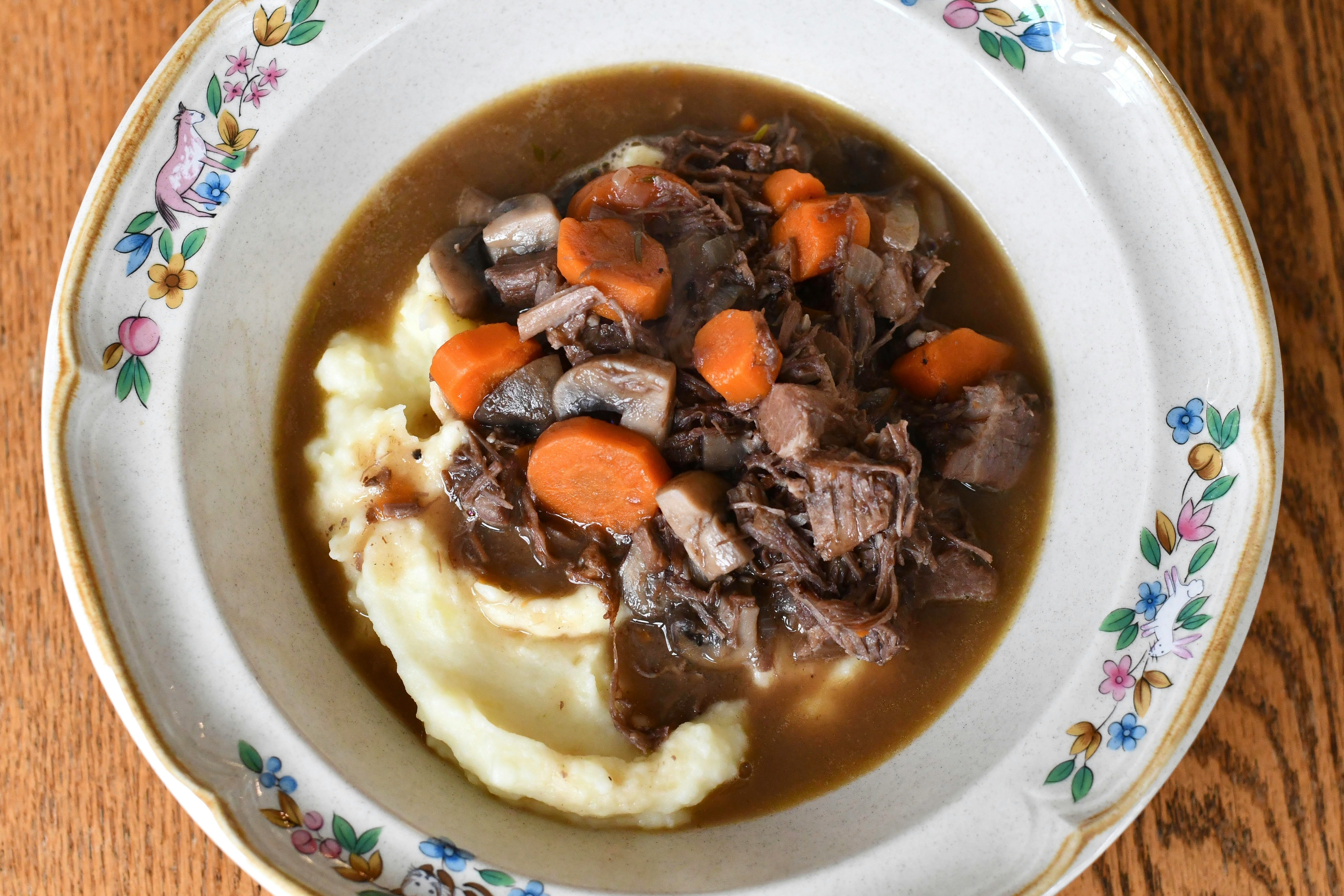
In our first year here, Sean made bœuf bourguignon for the first time, and we were completely taken with it. It was so delicious. The second time he made it, we invited French friends over for dinner, and when they arrived Sean was still in the kitchen, cooking. The husband came in with a glass of red, sipped it, and stood there observing.
Sean started chopping celery.
“You’re putting celery in it?” he asked.
Sean said yes.
Our friend put his hand on Sean’s shoulder. “Next time,” he said, “we will make it together.”
It still makes us laugh. Apparently, the French have very strict views about how a bœuf bourguignon should be made, and an adapted version is not something they get excited about. We received the note.
9. The raclette
We had never heard of raclette before we moved to France.
In our first fall, our new French friends invited us over for a raclette lunch. We said yes with total confidence and absolutely no idea what it was. Well, we went, and man, it was delicious.
So, for anyone in the position we were in: raclette is a cheese, and also the meal you make with it. It comes from the Alps, Switzerland and the Savoie, where the original method was to hold half a wheel of cheese up to a fire and scrape off the melted layer (racler means to scrape). At home, almost everyone uses a tabletop raclette set, a small electric grill that plugs in, with a stack of tiny nonstick pans, called coupelles, that slide in underneath. Everyone puts a slice of cheese in their own little pan, slides it under the heat, waits for it to bubble, and then pours it over whatever’s on their plate: boiled potatoes in their skins, usually, plus charcuterie, cornichons, little pickled onions, bread, vegetables, whatever you like, really.
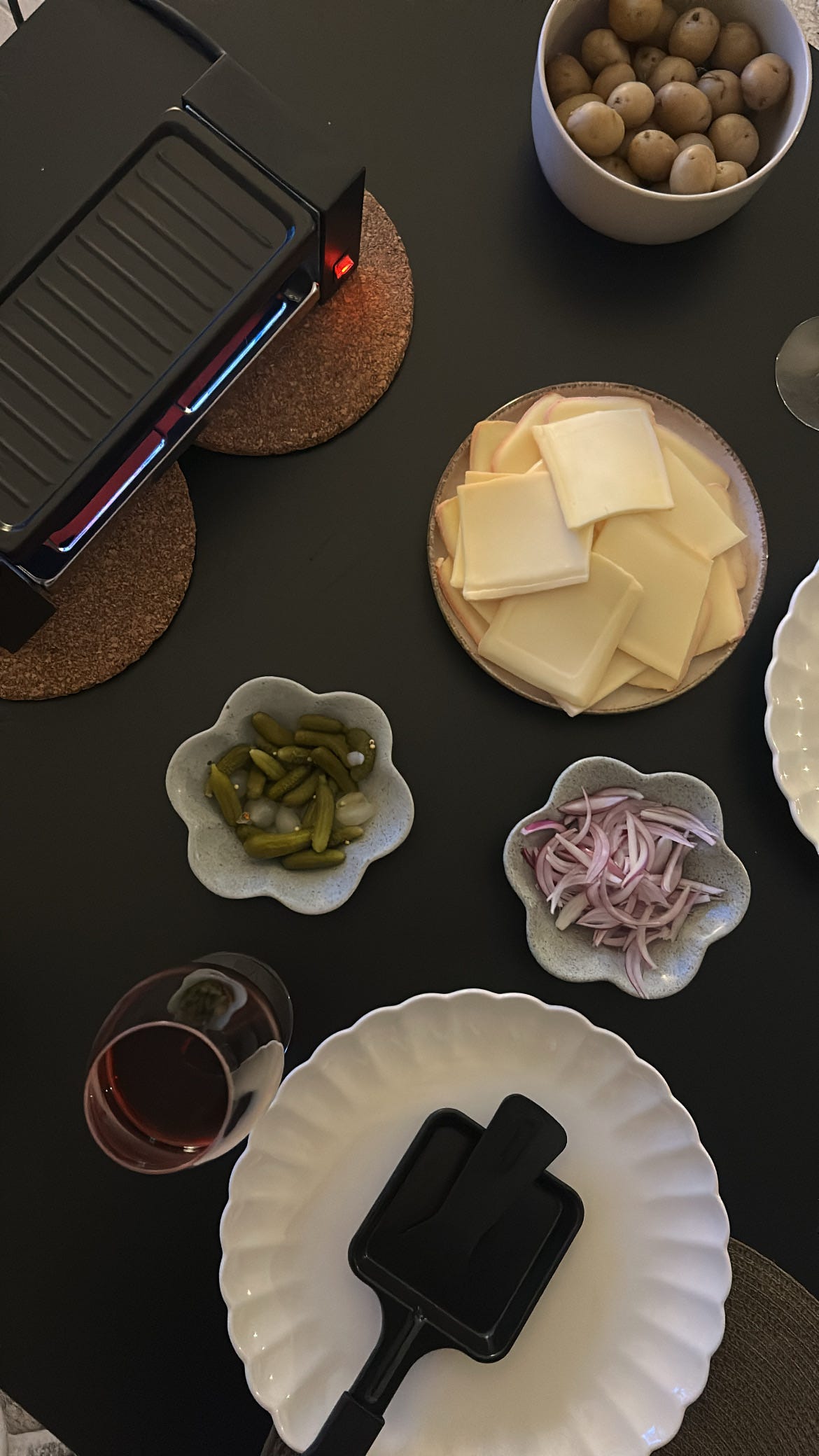
You can get all different kinds of raclette cheese. Our favorites are the poivre (with cracked pepper), and the fumée (which is smoked).
It was such a delightful experience, and we soon learned that raclette is a very strong tradition here. Now it’s one of our surest signs of the season: you know it’s fall when raclette cheese starts showing up in the stores and markets. Our organic store even sells a raclette pizza, which our kids consider the best pizza that has ever existed, anywhere.
For our first Christmas in France, we exchanged gifts with our landlord at the farmhouse. Her gift to us was a raclette set. It’s honestly one of the best gifts we’ve ever received, and it comes out every single fall. Last Christmas, our first at the château, we served raclette to our family, and it was a big hit. It’s hard to go wrong with a meal centered around delicious melted cheese.
Every spring, the raclette pizza disappears from the organic store, and it's always a sad day in our house. Spring in France has its own small signs too. The first is a cheese section, sans raclette.
À bientôt,
Kamille
If this was your kind of autumn, follow along. My essays about life in France are free, always, and land in your inbox twice a month.
And if you’d like the inside of the château, too (the renovation itself, room by room and reveal by reveal), that lives in my Castle Diaries posts, for Supporting Members.
P.S. If you'd like to see the fog, the falling leaves and even the melted cheese in motion, we film our life at the château on YouTube. You’re very welcome to come along: https://www.youtube.com/@OnceUponaCastle
Autumn at the chateau seems magical.
What a lovely read. Cyclamen were used medicinal, for fishing and, of course, magic. Just like Blue Bells we're used for starch. Horse chestnut give a bright yellow dye. Those first Chateau owners planted it for use, while we enjoy the beauty. And don't like to eat so much we need purgatives and dislike starched stiff collars. Let's not talk about bright yellow clothing. I remember my Swiss gran sending me on chestnut adventures to put them with carved crosses down on salt. You could hear them pop in the hot oven. ( and my grandpa mutter because he cut himself while carving the chesnuts).Herb butter and home made bread. A reward after a day of hunting chestnuts. I repeated that with my kids. Isn't it fantastic you can take the mushroom for identification to the pharmacist? Perfect country, France.