


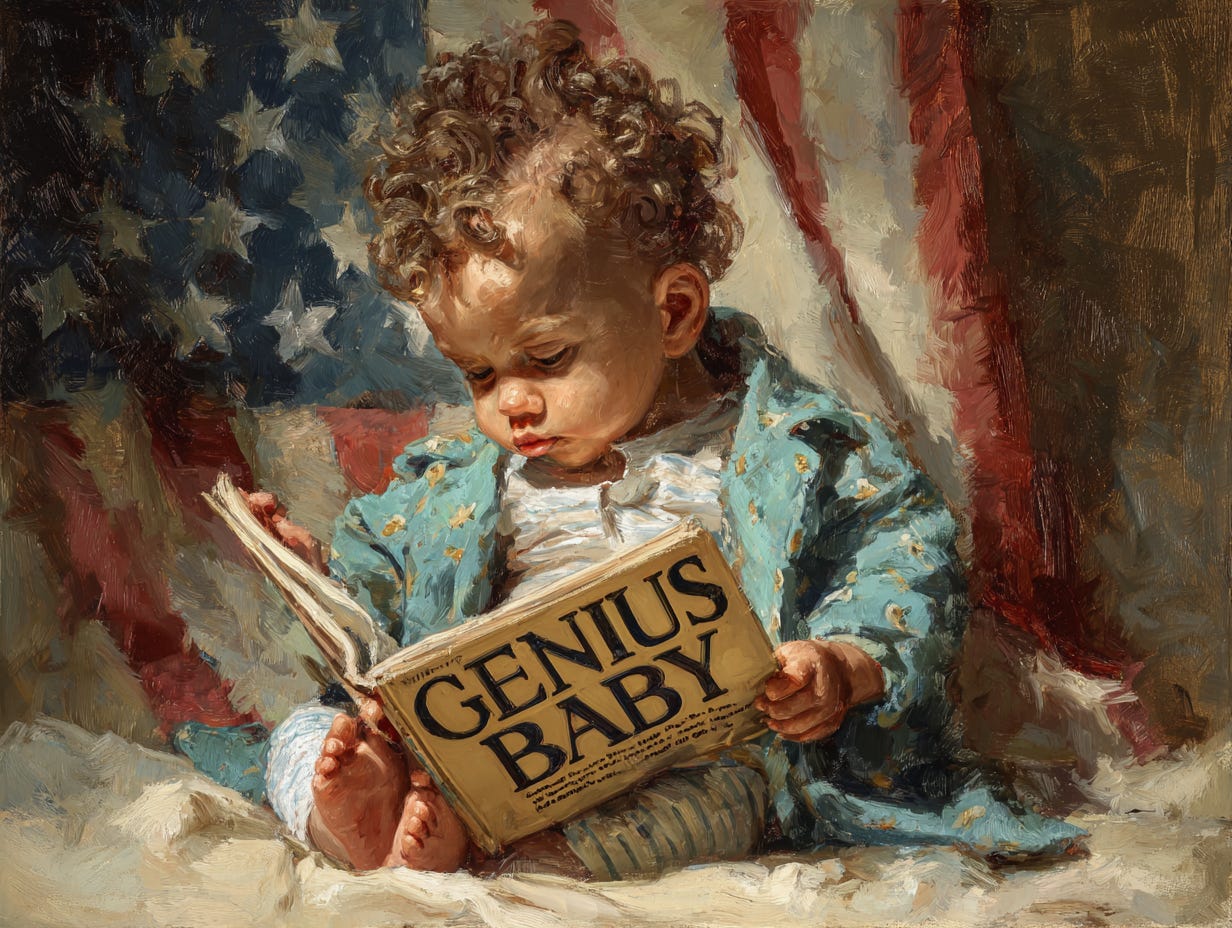
When our first baby was born, the very first parenting book handed to us was The Happiest Baby on the Block. It promised to help us survive the early days - and it did, sort of.
But as soon as we got past the swaddling and shushing stage, we were told what came next: The Whole Brain Child.
The message was clear: it’s not enough to have a happy baby - now your baby must also be smart.
And not just smart - optimized.
There was Baby Einstein. Baby sign language. Tummy time. High-contrast flashcards for newborns. Word-counting apps. One friend of ours worked as a nanny for a tech couple in the Bay Area, and she told us their baby’s nursery bookshelf included titles like Quantum Physics for Babies and Computer Engineering for Babies. Because apparently, learning animal sounds just doesn’t cut it anymore.
It’s not surprising. American parenting culture is steeped in performance metrics and competition, even for toddlers. There’s been a steady drift over the decades - starting somewhere around the Sputnik era, when the U.S. panicked over Russia’s scientific advancement and began pushing early academics in earnest. Add in the rise of attachment theory, baby brain scans, preschool rankings, and “gifted and talented” programs, and the result is a whole generation of loving, well-intentioned parents who feel low-key panicked that their kid might fall behind.
Behind what? That part was never clear. But somewhere out there was a theoretical child who’d already been accepted to Harvard Preschool, and we were all subconsciously racing that ghost.
But here’s the thing we’ve learned since moving to France:
No one here cares.
France Starts Late, and Doesn’t Apologize
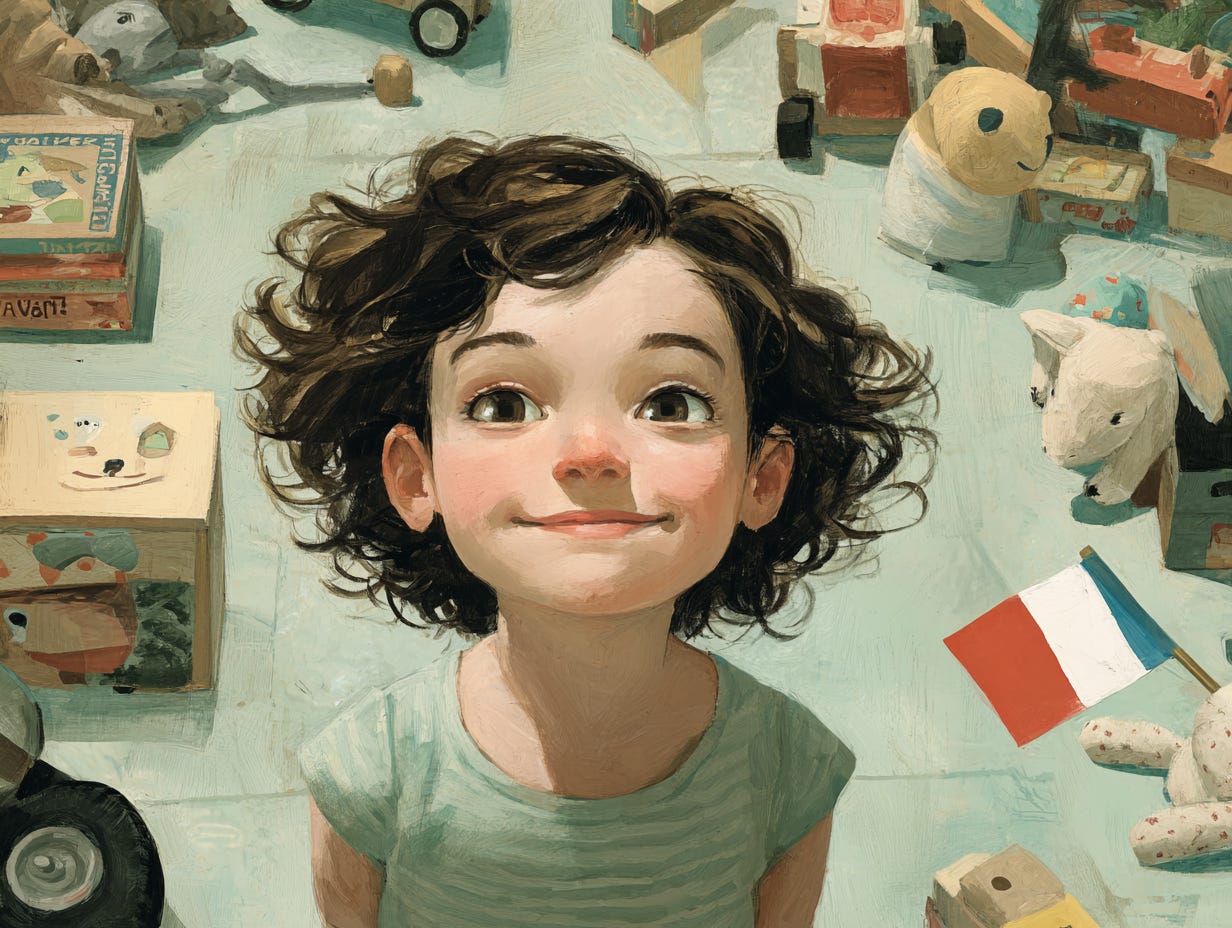
Around age 6, in CP (Cours Préparatoire), French children begin formal reading instruction. Before that, it’s all input: stories, conversation, songs, play. No pressure. No charts. No existential dread over sight words.
There are no “Your Baby Can Read” programs. No proud videos of toddlers reciting Shakespeare.
And yet, somehow, the kids learn to read.
In fact, French students often read more fluently by age 7 than many of their worksheet-trained counterparts in countries like the U.S. - not because they started earlier, but because their foundation is stronger. A national reading norms study (EVALEC)* found that French children develop strong decoding and fluency skills through an early focus on oral language and phonemic awareness, rather than academic pressure or early reading drills.
A Cultural Difference That’s Easy to Miss
It’s easy to assume the French are just more relaxed. But the truth is deeper than that. The value systems are different.
In the U.S., parenting culture often equates early cognitive performance with long-term success. There’s a lingering belief that the sooner a child can read, the brighter their future - as if childhood is one big race to get ahead.
But it’s not just about academics. American parents are also hyper-attuned to anything that might give their child a leg up. Take the trend of trying to plan due dates around school cutoffs - aiming for their child to be the oldest in the class, based on studies linking that age advantage to higher confidence and future success.
In France, the focus is different. There’s more trust in the developmental process, more emphasis on socialization, and less fear of “falling behind.” Childhood isn’t a launchpad - it’s a time to be a child.
I Was That “Gifted” Kid
And here’s the thing: I get it. I was always “ahead.”
I was one of those “gifted and talented” kids (the GATE program, in American schools). I skipped 7th grade because of high standardized test scores. I finished high school after my sophomore year and started college at USC at sixteen. I earned my bachelor’s degree just after turning nineteen.
On paper, it’s all very impressive.
But here’s the truth: being ahead didn’t just shape my education. It shaped my identity. It taught me, from a young age, to equate my value with being the best, the youngest, the fastest. And that mindset - that rushing - followed me into adulthood. It has taken me years to unlearn, and I’m still working on it.
I’m not even sure what the word “genius” really means anymore. In our household, we use the term loosely - mostly to describe my husband when he suggests things like making homemade passion fruit ice cream and watching Downton Abbey after the kids go to bed. I’ll look him dead in the eyes and say, with full sincerity, “You’re a f***ing genius.”
But genius isn’t black and white. It’s not a golden ticket to happiness or confidence. And it certainly doesn’t guarantee success or fulfillment.
👉 Become a paid subscriber to unlock the rest of this piece - and join me for the full series on Raising Kids the French Way, plus behind-the-scenes château life, culture shock, and the messy magic of slowing down.
Subscribe to read on ✨
