


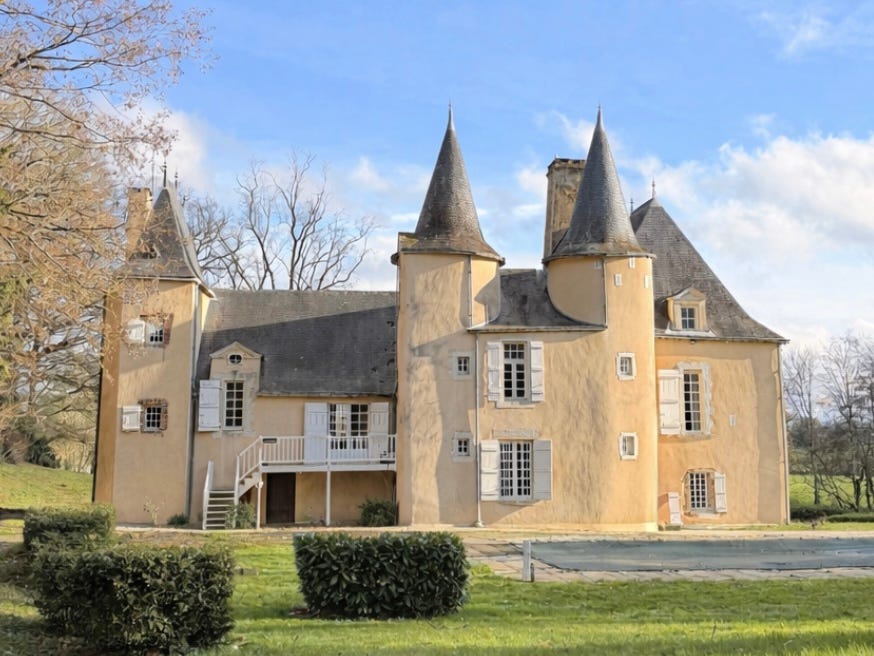
I remember strolling innocently into our very first château viewing.
We arrived excited, camera-ready, living our best “this could be the one” life.
The realtor walked up to us, barely finished her obligatory bonjour, and asked:
“Do you have the money to buy in cash?”
Not “Do you love the kitchen?”
Not “Can you imagine Christmas here?”
Not even “Would you like to see the garden?”
Cash. Immediately.
At the time, I felt confused. Slightly offended. Like…excuse me, madame, we are here to fall in love with turrets, not be interrogated at the door.
Later, I understood. In France, especially in château-land, that question is not rude. It’s a sorting mechanism.
Because the bank part can turn a dream into a six-month slow-motion suspense film.
Want the full actionable playbook? The companion chapter is here: How to Get a French Loan as an American (bank list & links, dossier checklist, and our exact process).
The part Americans are not emotionally prepared for
When we first started looking seriously, we heard the escrow process often takes six months.
Six months.
We came from California, where we bought a rental property and closed in thirty days. Thirty! We are conditioned to believe that if you have the documents and a pulse, you can be handed keys by next Tuesday.
France is not like that. France is more like…France.
long pauses
administrative steps
polite emails that contain no information
and a lot of waiting to see if someone, somewhere, decides they would rather not
It is not that nothing is happening. It is that everything is happening…behind a curtain…at the speed of a beret-wearing snail.
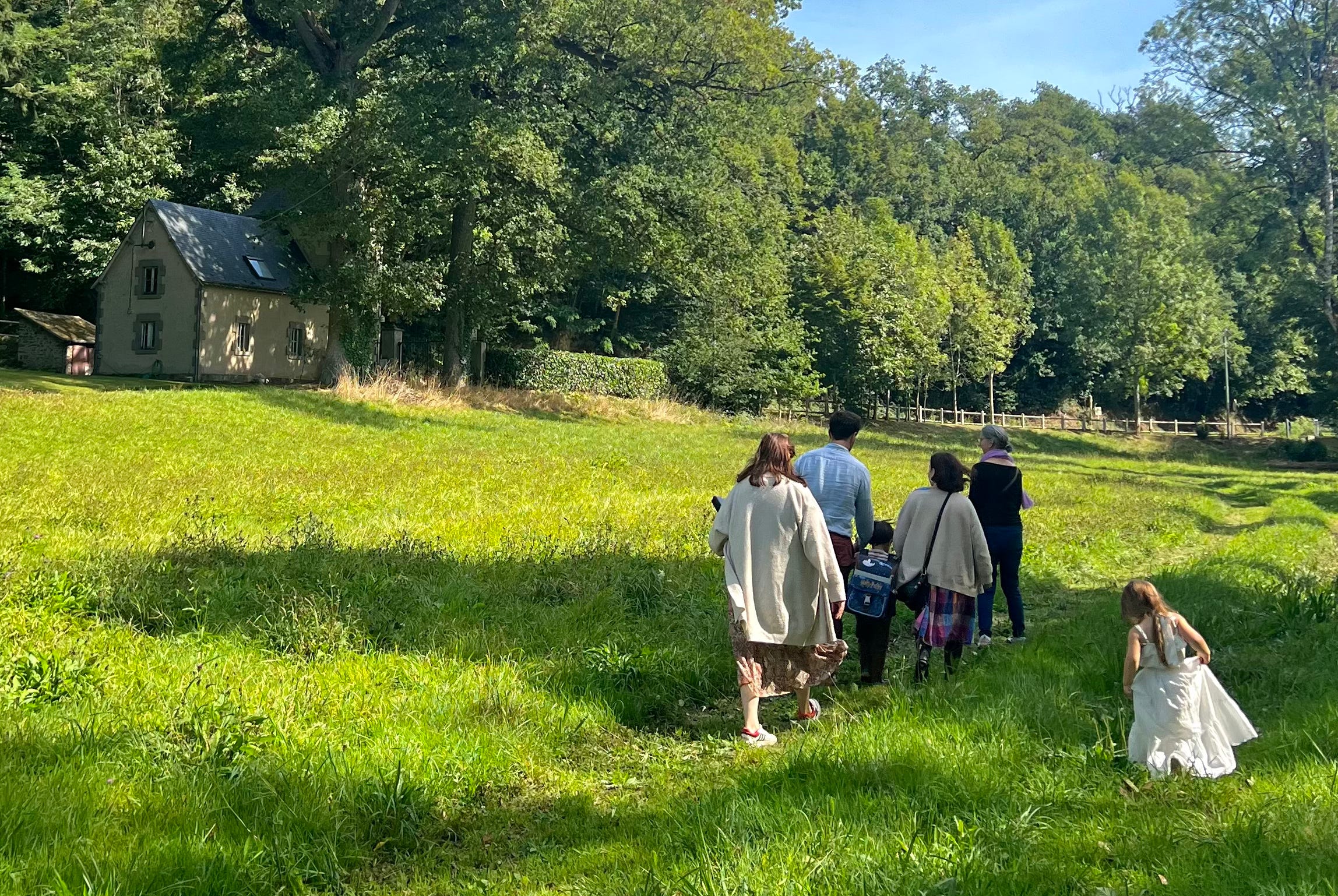
And the biggest reason for the long timeline is, bluntly: the bank process can involve multiple refusals. People apply, get denied, apply again, get denied again, revise, re-submit, wait, follow up, wait some more, and suddenly you are six weeks older and have developed a minor allergy to the word “dossier.”
If you’re a multimillionaire buying in cash…
First, I love that for you.
Second, this post may not be your personal struggle story.
Buying in cash eliminates a huge amount of friction. It also eliminates the part where your entire future is being silently judged by strangers who will not tell you why they don’t like you.
That said, even cash buyers should remember: if you pour every last cent into the purchase, you still need serious runway for life, maintenance, and upgrades. Château ownership has a way of producing surprise expenses when you least expect them.
If you’re not buying in cash, welcome
Before we moved to France, we heard every version of the story:
“It’s impossible for Americans to get a loan in France.”
“It’s totally doable.”
“My friend’s cousin’s neighbor got one in 2016, so you’ll be fine.”
“Just walk into a bank and ask.” (This advice is cute. Cutie cute.)
I did meet one American friend who got a French loan about six and a half years ago, and she kindly gave me her bank contact. That was our first real lead.
And here’s what we learned the hard way:
Six years ago is not the same universe.
Want the next chapter delivered as it happens? Subscribe free.
Why banks have become wary of Americans
This is not a personal attack. It’s just the current climate.
During the pandemic, there was a surge of foreign buyers. People fell in love with French properties online, sometimes bought without ever visiting, and arrived with a very romantic idea of what château ownership would feel like.
Then reality arrived, too.
Reality looks like:
ongoing maintenance
expensive upgrades
slower timelines
French paperwork that does not care about your feelings or time
and the fact that you can’t always solve problems by ordering something quickly
A sizeable chunk of those buyers eventually sold. Some properties sat for years. And banks ended up with a category of loans they no longer felt excited to repeat.
So now, many banks see Americans and think:
starry-eyed, far away, high risk, extra paperwork, uncertain outcomes.
Not always fair, but it’s real.
The key thing banks care about
French underwriting doesn’t just evaluate you. It evaluates the property.
That’s why “pre-approval” doesn’t really exist the way it does in the U.S.
In the U.S., you can get a pre-approval letter based on your finances, then shop confidently.
In France, the bank often wants to see:
what you’re buying
where it is
how liquid it would be if they had to resell
and whether it looks like a crumbling problem
Which is why château loans can be…delicate.
Our first big refusal
The first bank we pursued felt promising. We had a personal referral. We put together what I considered an impressive application.
We submitted. We waited a week. Two weeks. I followed up. “Would love an update!”
They told us it was still being reviewed. Lots more following up.
Finally, six weeks later, we received a short email: refused.
No reason.
I called immediately, trying to understand what we could fix. They told me they weren’t obligated to explain. Eventually, they offered one sentence:
“We don’t feel comfortable loaning on a château.”
This is the part where I would like to time travel and gently shake everyone involved. Would have been wonderful to know that six weeks ago. (spoken in a rage whisper)
Château prejudice is real
Here’s the unromantic truth:
Banks can be reluctant to lend on châteaux because:
they can take longer to resell
the buyer pool is smaller
and people sometimes romanticize the idea, then panic mid-renovation and list it again
At one point, a mortgage broker even said something like:
“Could you buy something that isn’t a château…or at least doesn’t look like one?”
Meaning: could we buy a property without towers.
No, madame! I need the towers!
Which gave the broker a headache, but I pushed on. I was determined to find a way to realize our dream without compromising.
Why a French job makes everything easier
If you have a high-paying, full-time job in France, the process is usually much smoother. It’s familiar income. Familiar documents. Familiar contracts.
But if you’re relying on U.S. income, the bank has more work to do:
different systems
different tax documents
different employment structures
and often more perceived risk
Sometimes applicants get refused quickly simply because it’s “too complicated.”
Which is maddening, but again: real.
The turning point that finally got us a yes
After enough refusals to develop a new personality, we got smarter. We stopped treating it like one application. We treated it like a pipeline.
We eventually worked with a mortgage broker who specializes in helping Americans get French loans. We did not end up closing through them, but they were incredibly helpful, and honestly, if you want to preserve your sanity, this route is worth considering.
Brokers charge a fee. We were quoted around €5,000 by one and €6,000+ by another for the type of purchase we were making.
But what you get is:
banks that are actually open to your profile
knowledge of each bank’s quirks
and a strategy instead of guesswork
We ran multiple applications at once. If one bank said no, we still had momentum elsewhere.
And we finally got our yes when we shifted to the château we ended up buying.
It still had towers.
But it was more bank-friendly in the ways banks care about:
more obviously livable
more obviously resellable
in a location they liked better
less “romantic fantasy” on paper
And suddenly, the tone changed from “non” to “okay…maybe.”
The part nobody tells you about the “promesse”
Many foreign buyers put “obtaining a loan” as a condition in the promesse (the purchase agreement). That protects you, but it also reveals the trap.
Because if you cannot obtain a loan, the sale collapses. It happens all the time. People don’t realize how many refusals they might face until they’re already emotionally attached to the property.
A few realities to know going in
France typically uses a 35% debt-to-income guideline.
Banks prefer stable income. Freelancers and contractors can be a harder sell, especially with foreign (U.S.) income.
Some banks will only count 70–80% of your foreign income.
If you have a strong portfolio, there can be other paths (asset-backed structures, collateral approaches, or relationship banking). Not always, but sometimes.
So is it possible?
Yes. It can be done.
But it is not the smooth, clean “pre-approval then shopping spree” experience Americans expect. It’s more like:
find the property, build the dossier, find the right institution, be patient, be strategic, and do not take refusals personally.
Which is irritating advice, because the refusals feel very personal when you’ve spent six weeks waiting.
But there is hope, especially if you approach it like a process, not a single make-or-break application.
If you want the full actionable playbook, with links to the banks that said yes (and the banks that said ‘non’) the companion chapter is here:

And if you have questions, drop them in the comments. I’m happy to answer what I can.
If your question is specific (your income mix, the bank responses you’re getting, or “is this normal?”), paid subscribers can also ask inside the private subscriber chat.
À bientôt,
Kamille
Note: This is our real experience and what worked for our file. I’m not a bank, CPA, or financial advisor, so this isn’t financial advice. Use it as a guide, then verify details with your lender, notaire, or a qualified professional.
New here? Start with:


Want the renovation chapters? Castle Diaries is where I share the full behind-the-scenes: what we’re doing next, what it costs, and the decisions as we make them.
“living our best ‘this could be the one’ life.” I remember this 💯
This post is incredibly helpful, Kamille. So many people write about life in France, but very few focus on the specific details of *how* they made it happen. We had ruled out the idea of obtaining a mortgage because we'd been told previously (on a webinar run by a French expat relocation business) that it was very difficult. Your experience - while certainly not easy - makes me reconsider this as a legitimate possibility. So grateful to have found your page!