


There was a time, not too long ago, when our evenings ran like a precision machine, fueled by anxiety and glow-in-the-dark blackout curtains.
We were in what I call our Very American Baby Era.
You know the one: where sleep is science, and every deviation from the schedule is a potential future IQ point lost to the abyss.
We had the whole arsenal:
• Blackout curtains sealed tighter than a moon mission
• White noise machines tuned to “womb-adjacent whoosh”
• A baby monitor that tracked sleep cycles, breathing patterns, and ambient room temperature with more rigor than a NASA pre-launch checklist
Why? Because we were told - in books, in blogs, in peripheral observation, in politely terrifying pediatrician tones - that sleep is sacred.
Miss a nap window? Goodbye, cognitive development.
Delay bedtime? You’re basically setting your child up for a lifetime of mediocrity and mood disorders.
So we obeyed. Religiously.
Dinner out? Nope, it’s bedtime.
Family gathering still going strong? Sorry, we have to go.
A full meltdown from trying to rush home for 7pm tuck-in? Par for the course.
And then we moved to France.
Where bedtime is…not quite so sacred.
A Country That Sleeps When It Feels Like It

Here, sleep operates on a seasonal rhythm more than a rigid schedule.
In the winter, when the sun sets around 4:30pm, everything naturally winds down earlier.
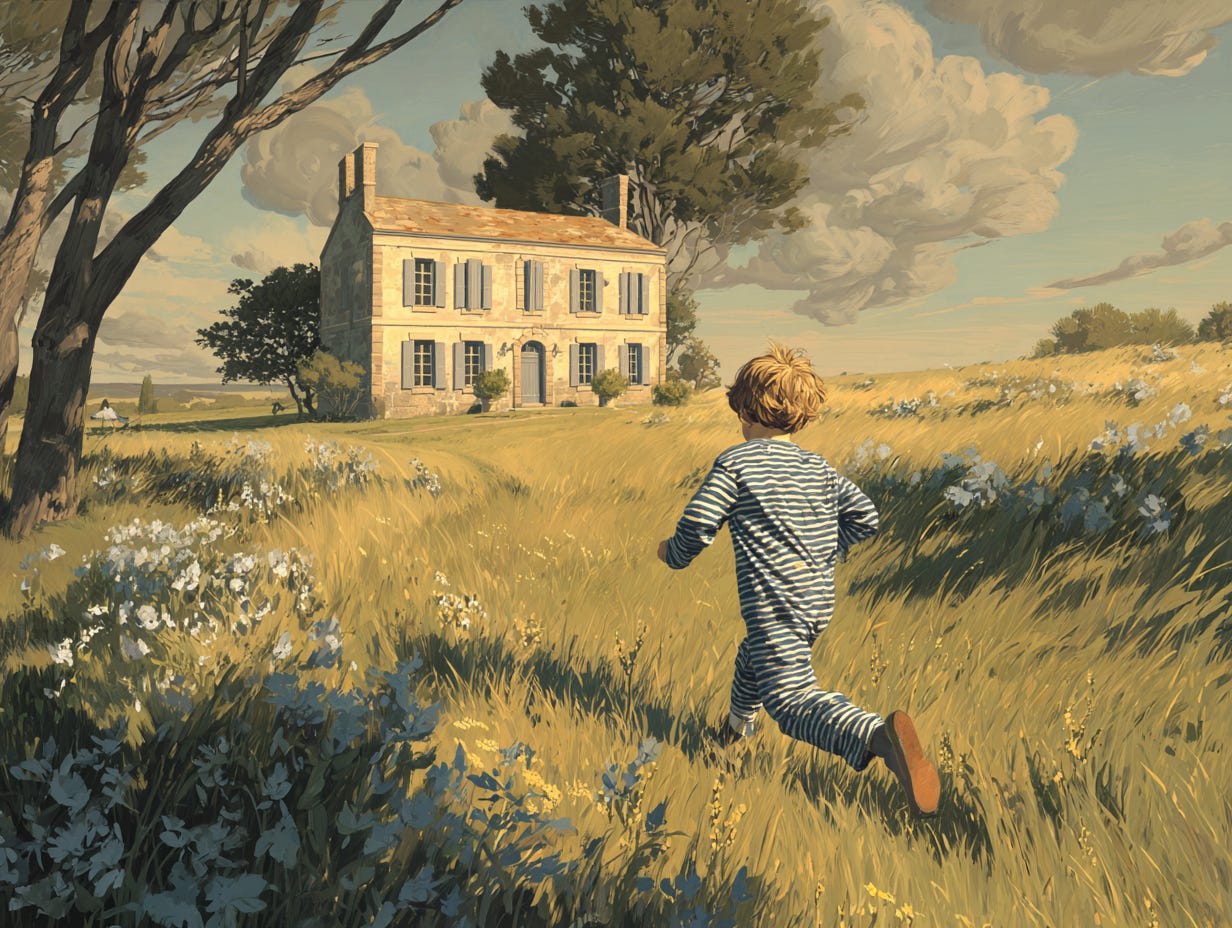
In the summer, when golden light stretches past 9:30pm and the fields are still buzzing with crickets and kids, no one’s rushing their children inside for an early bath and book routine.
Frankly, it would feel rude. The entire village is still out.
Dinner here is often at 8pm.
Yes, with the children.
No, there is no special kids’ table with boxed mac and cheese. They sit. They eat. They participate.
Nobody’s bringing up their child’s circadian rhythm over rosé.
At first, this made my inner American Parent twitch.
Where’s the boundary? The routine? The schedule laminated on the fridge in three different colors?
But then came the night of the school performance.
What Happens When a Kindergarten Play Starts at 8pm
When I first saw the announcement that our kids’ end-of-year school performance would begin at 20h00, I assumed it was a typo.
Surely they meant 18h00.
But no.
Eight o’clock, curtain up.
I immediately pictured absolute chaos: overtired children collapsing mid-recital, parents holding it together with espresso and willpower.
Instead, what I saw was…joy.
The kids were thrilled.
Performing under the stars, past their usual bedtime, in front of an applauding crowd? It wasn’t a meltdown - it was magical.
And it made me realize something simple and slightly uncomfortable:
Maybe we had overcorrected.
Sleep Still Matters, But So Does Sanity

To be clear, we haven’t burned our old sleep books in a ceremonial fire.
We still believe in rest, routines, and a good early bedtime - especially after a long day or on school nights.
But we’ve stopped treating bedtime as a moral boundary between “good” and “bad” parenting.
We no longer panic if things slide a bit later.
And we’ve discovered that the stress of obsessing over sleep often did more harm than the lost minutes of sleep themselves.
Here in France, sleep is distributed more generously throughout the day.
Shops close for la pause.
People go home and rest.
Even schoolchildren who have technically aged out of naps are given quiet time - not with worksheets or screentime, but actual pillows on their desks and soft music.
It’s not “nap or else.” It’s “rest when you need it.”
That small shift changes everything.
The Real Gift: Letting Go of the Clock
France has taught us many things - how to navigate bureaucracy with a bottle of wine, the appropriate number of cheeses to serve at a dinner party (five), and that rushing rarely improves anything.
But perhaps the most surprising lesson has been this:
Bedtime doesn’t have to be a battleground.
It can be a rhythm. A guide. A flexible pause.
Not an emergency.
Some nights still feel easy. Some feel like a negotiation with tiny irrational humans armed with stalling tactics and existential questions.
But we no longer see it as failure when bedtime happens at 8:30 instead of 7:30.
Instead, we’ve learned to zoom out.
Because bedtime is just one small part of a much bigger picture: A picture where connection matters more than control.
Where slowing down matters more than locking in a schedule.
And where the night - soft and glowing and a little too late - might just be where the best memories are made.
So tell me…
How sacred is bedtime in your home? Have you found any freedom in letting go a little?
I’d love to hear from you in the comments. Over four posts, I’m exploring what it’s really like to raise American kids in rural France - from bedtime culture and birthday parties to freedom, food, and friendships. The second half of the series will be available for paid subscribers only.
Become a paid subscriber to receive the rest of the Raising Kids the French Way series:
Part III:

Part IV:

Merci, as always, for being here. And for staying up past bedtime to read this.
À bientôt,
Kamille
Author’s Note:
This is all part of my Life in France, Unfiltered series, where I share what we’ve learned about life, parenting, and culture as Americans raising a family in France.
You might also like my post on why French kids seem to stay innocent longer. It’s another good one. 👇

Thanks for reading. And yes, we’re all going to bed a little late tonight. 😅
As a French child, I can tell you that in summer, we were never going to bed until quite late - and I have magical memories of long hike with my grand father in June where we could see, smell and feel the summer night coming. I raised my children the same way in the US, and most of my neighbors in the suburb are doing the same. I see kids going for a stroll with their parents in my american suburb at 8:00 pm on a school night in May, and it is fine. My main issue with the way America does childhood is the obsession with sports - and how early it becomes a competition. For me, that is the most detrimental to children in the US; all the sports are oriented to create “champions” way too early and cut the options of just playing a sport because it is fun and healthy. Also, it should be much cheaper to participate.
I think the big elephant in the room is early bed times enable parents to participate in American capitalism. If your kids are in bed at 7 (and hopefully can go to sleep alone without your assistance!) you can “log back in” and do more work. Or maybe you don’t but it’s your precious time to take care of yourself as a parent because you didn’t take care of yourself all day (because capitalism means you should work all day and shuffle your kids to activities that you pay for and then put them to bed and maybe then you’ve earned a moment of peace but go to bed early to wake up early and churn out more). Structuring your day around your kids and relaxed fun inherently means you’re not structuring it around maximum productivity. I’ve chosen this relaxed sleep lifestyle here in the US and it definitely had an effect on my performance in corporate America (and I’m ok with the impact on my earning potential and long term promotion prospects). Additional food for thought! Thank you for sharing this!