


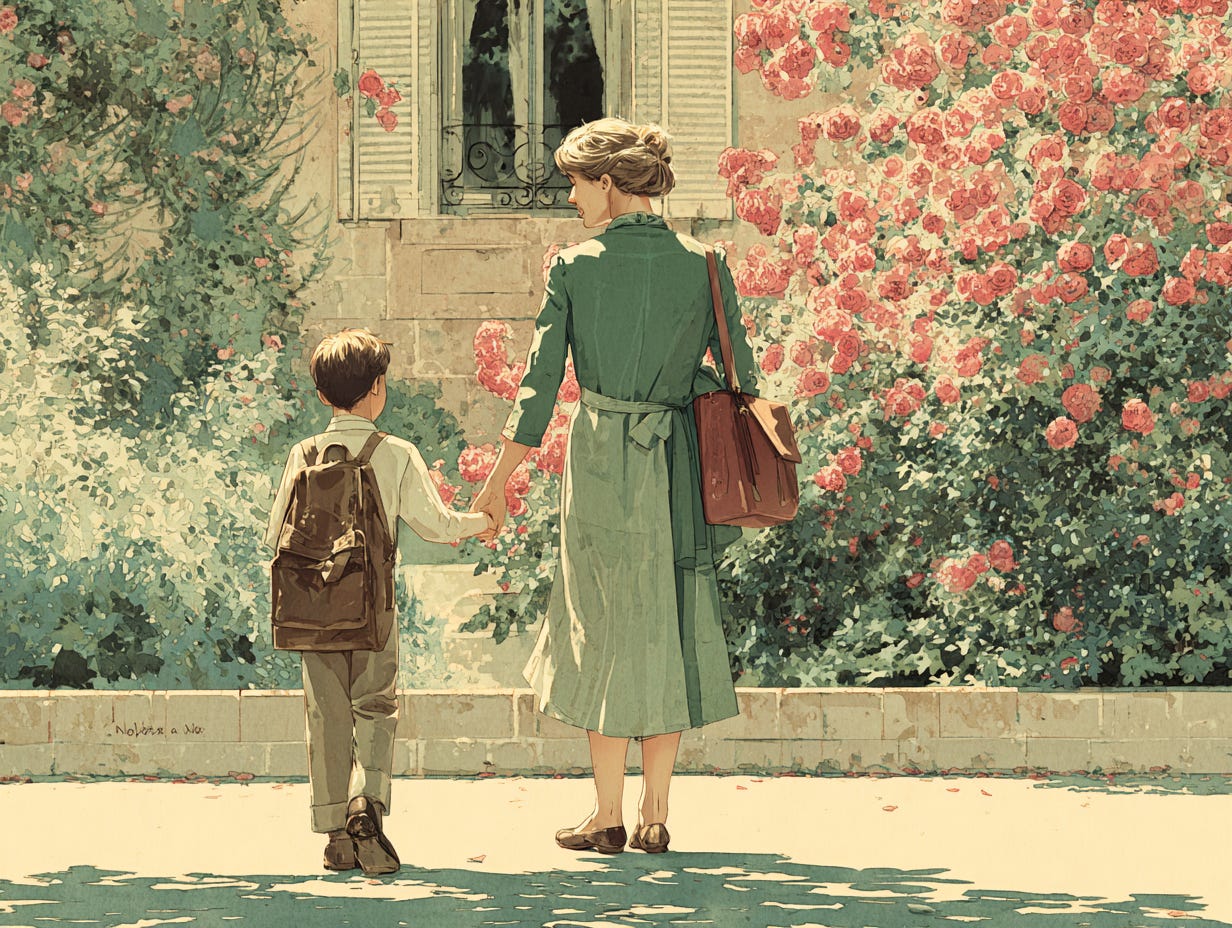
Before we moved to France, I assumed “family values” were the kind of thing politicians shouted during debates - abstract, vague, and mostly performative.
But here? It’s real. And it’s cultural.
You can see it at the boulangerie, where ten-year-olds kiss their grandmothers on both cheeks and then carry the baguettes home. You hear it in the way teenagers speak to their parents - less eye-rolling, more respect. And not the fear-based “obedience” kind we sometimes confuse with respect in America - but actual warmth, connection, and a sense that their parents are still…important.
And that’s when it hit me.
France knows how to hold on to its kids.
The Book That Shifted My Parenting Forever
Back in California, someone handed me Hold On to Your Kids by Dr. Gabor Maté and Dr. Gordon Neufeld. At first, the title sounded ominous. Were we losing them? To what?
Answer: To each other.
The book makes the case that in modern Western culture, especially in North America, kids are no longer primarily attached to adults. They’re attached to peers. And when peer culture replaces adult culture as the main point of reference, we lose the transmission of values, wisdom, and emotional grounding. Instead of looking to parents or grandparents, kids look sideways, and start measuring everything against what’s “cool,” what’s trending, and what won’t get them mocked in the schoolyard.
Cue the spiral of insecurity.
And it’s not just a theory. It’s everywhere in American parenting, from the toddler who only listens when another kid tells them to, to the teen who treats their parents like overpaid Uber drivers. Most of us know this dynamic firsthand.
Then We Moved to France
And I noticed something quietly radical: French kids still seem bonded to their parents.
They kiss them goodbye at the school gate. They eat lunch with them on Wednesdays. They don’t seem allergic to being seen in public with their family. And in conversations with French parents, I kept hearing things like:
“Oh yes, my kids spend each afternoon at my parents’ house.”
“My son always helps his grandfather in the garden.”
“My daughter tells me everything. Maybe too much!”
These were not cherry-picked quotes. This was normal life.
And then I remembered something from the book - the part that stopped me in my tracks.
In one chapter, Dr. Neufeld describes a village in Provence where adolescent attachment was still clearly adult-oriented. The teens spent afternoons at cafés with their parents. They talked easily with elders. The peer culture hadn’t replaced the adult one - it existed, sure - but it wasn’t dominant.
This wasn’t utopia. It was just…France.
And it was working.
