


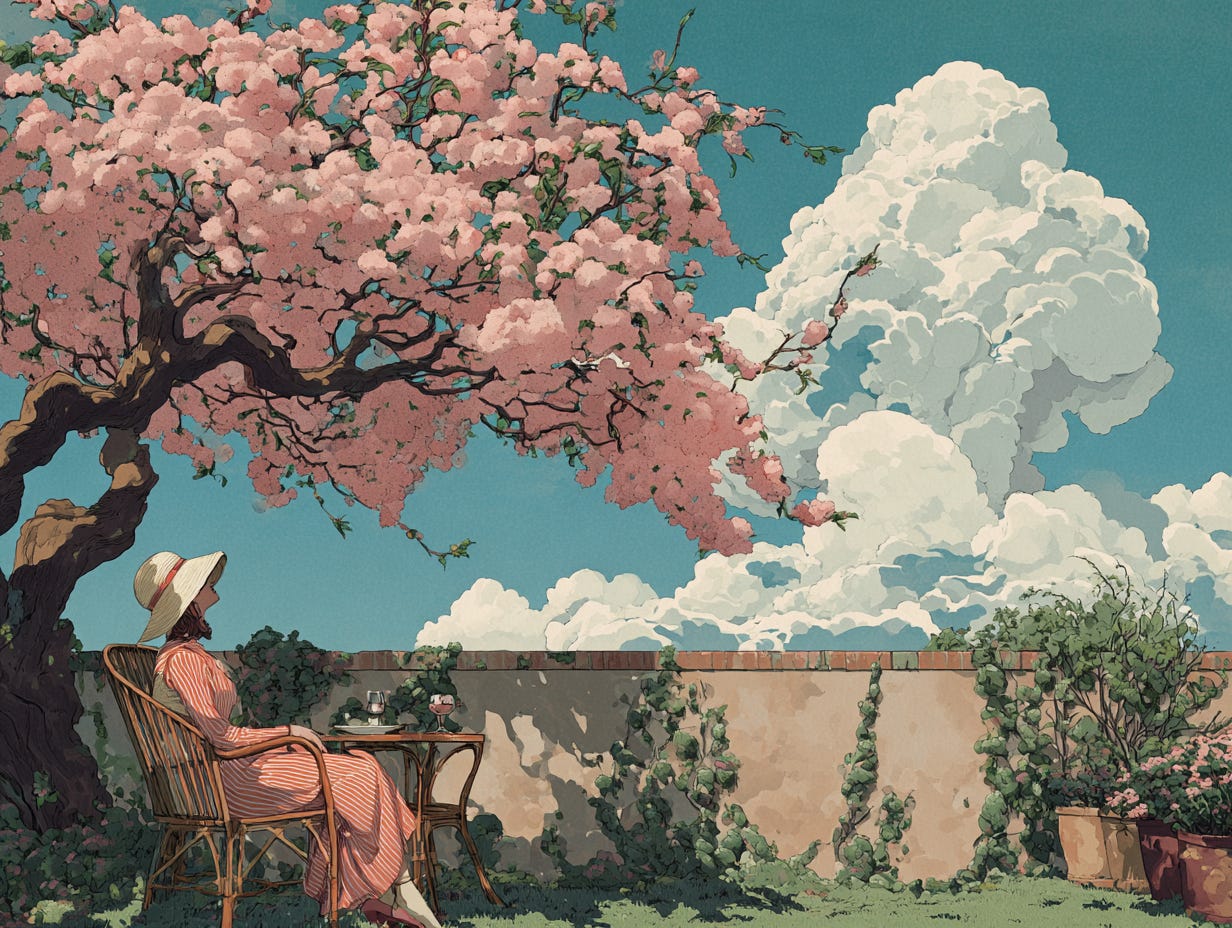
This past spring, I sat under the cherry tree in our garden, a book at my side, a glass of wine getting lonely. Flowers were blooming. Bees hovered lazily. It should have been idyllic.
But within five minutes, I was twitching.
My mind raced: I could be answering emails right now. I should be making some phone calls. Maybe I should at least fold laundry while I sit here?
The garden was lovely. The breeze was perfect. And yet, I felt antsy. Anxious. Even guilty.
This, I realized, is the hard-trained American problem: we don’t know how to do nothing.
The Productivity Reflex
Like most Americans, I was raised on double-tasking. Movie nights? Do your homework at the same time. Walks? Listen to a self-improvement podcast. Dinner? Plan tomorrow’s logistics.
Even now, I sometimes - fine, always - sneak in computer work while watching Netflix, a perfectly optimized cocktail of distraction and efficiency. I don’t even feel ashamed of it. It’s just who I’ve been trained to be.
In the U.S., productivity isn’t just a habit. It’s more than that - it’s an identity.
The French Counterpoint
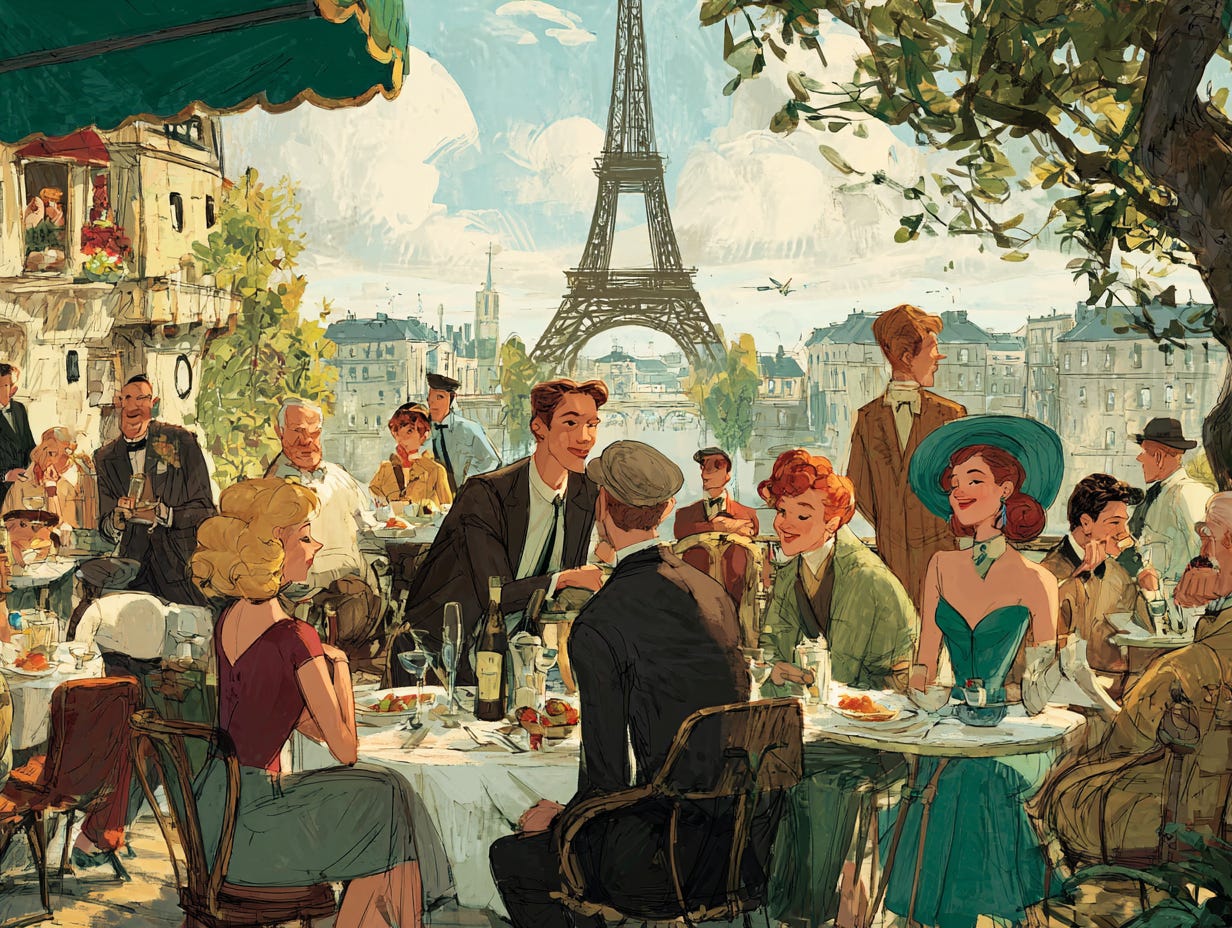
Here, people unapologetically sit on benches for hours, staring at pigeons. They linger over coffee and have epically long lunches without scrolling a phone. They embrace the long pause - no agenda, no timer, no guilt.
It isn’t laziness or procrastination. It’s an entirely different relationship to time. The French treat nothingness not as a void to fill, but as a presence in itself.
If you're new here, I'm an American writer living in a small château in rural France with my husband and two children. Once Upon a Castle is where I write about the château, the renovation, and the ongoing education of two Americans who thought they knew what they were getting into. What you're reading is free. Paid subscribers get six posts a month - two more essays like this one, two château renovation diary entries, and access to everything in the archive. Come stay a while.
The Paradox
Doing nothing often ends up being the most generative thing of all.
When you allow stillness, ideas arrive. Conversations deepen. Children learn how to play without constant supervision. Life stops feeling like a frantic race you’re losing.
I see it in my kids. They’re growing up in a culture where rest is built into the day: long school lunches, mandatory pauses, Sundays where shops are closed and the whole country collectively agrees to just be somewhere. They don’t feel guilty for downtime. They see it as normal.
I’m grateful they won’t have to unlearn the same guilt I’m still wrestling with.
Why It’s So Hard for Americans (achem…me)
To be fair, Americans aren’t broken. We just inherited a cultural script.
Our history tells us to equate exhaustion with virtue, to glorify hustle, to monetize every hobby. The result is a national case of rest anxiety - the discomfort of having nothing scheduled and feeling like you’re doing something wrong.
The French, meanwhile, have built cultural permission for pause. Two-and-a-half-hour lunches. August holidays that actually mean holiday. A deep-rooted belief that your worth is not tied to your output. It rubs off on everyone here - children, parents, even foreigners trying to retrain their brains in the garden.
Where I am with it
I’m not there yet. I still get a buzz from crossing things off a list. I still twitch when I sit too long without producing something. But I’m practicing.
The hardest part of slowing down is convincing myself I’m not wasting time. Every time I let a thought wander instead of lassoing it into a task, I get a little closer.
And sometimes, in that nothingness, I notice things: the way the light hits the stone wall, how my son laughs from the trampoline, how the breeze carries jasmine and roses all at once. None of it is productive. All of it matters.
How to practice doing nothing
Most of us can’t move to France. But the pause doesn’t require a passport - it just requires a willingness to be bad at it for a while before it starts to feel normal.
A few places to start:
Eat lunch without a screen. Not every day, not forever, just sometimes. No phone, no laptop, no podcast. Give lunch the twenty minutes it deserves and see what happens. The French would say this is the minimum viable act of civilization. They’re probably right.
Take a walk with no destination and no audio. No podcast, no music, no voice memo of ideas you’re having. Just the walk. You’ll feel agitated for the first ten minutes. That’s the productivity reflex complaining. Keep going.
Let there be a gap. Between tasks, between meetings, between the end of one thing and the start of the next - resist the instinct to fill it immediately. Sit in it for two minutes. Look at something that isn’t a screen. The gap is not wasted time. The gap is where you find out what you actually think.
Stop calling it recharging. The moment you frame rest as a productivity tool - something you do so you can work better later - you’ve missed the point. Rest doesn’t always need to justify itself. The French don’t rest just so they can work harder. They also rest because rest is part of being alive.
Give boredom a chance. Children who are allowed to be bored figure out how to play. Adults who are allowed to be bored figure out what they actually want. Boredom is not the enemy. It’s the room before the good idea.
Once Upon a Castle is where I write about this life - the château, the renovation, and what it actually looks like to trade everything familiar for something completely unknown. Paid subscribers get six posts a month: two more essays like this one, two château renovation diary entries from inside the walls, and access to everything in the archive. Come stay a while.
À bientôt,
Kamille
✨ Share this with a friend who also can’t sit still. Consider it their first French lesson.
In late 1999 I lost my son 9-year-old son, Benjamin-Hayes, to leukemia. Writing his memoir was exhausting, frustrating, tear-filled, rewarding. By the end of 2002, the majority of the first draft was complete. In one chapter, finding the correct way to express Benjamin-Hayes’ life was more than elusive … the concept slipping around in my mind and notes like a vaporous cloud, light years away.
During the holidays, I was sitting on a dock overlooking a frozen pond in Tennessee. Bundled up, my pens and note pad in my brief case, I sat slouched in a chair, staring into the sky for hours. Red-tailed hawks, turkey buzzards, blue herons flying overhead, doing their things, with my creative energy stuck in park.
With the afternoon advancing to darkness, a single maple leaf began to flit through the air above the pond, focusing my attention. Its movements as on puppet strings, rambling in differing directions I found frustrating and elegant.
And then, in a moment, the leaf took off beyond the border of the pond, zooming up and up, out of sight.
Seizing the moment, I wrote down that Benjamin-Hayes’ spirit soared throughout his struggle. Soared.
That’s what nothing conjures. Nothing is magic, healing, mind blowing, triumphant. It’s such a gift to our art and souls. Such a gift.